Which Ashwagandha Tablet Works Best for Stress in India?
Share
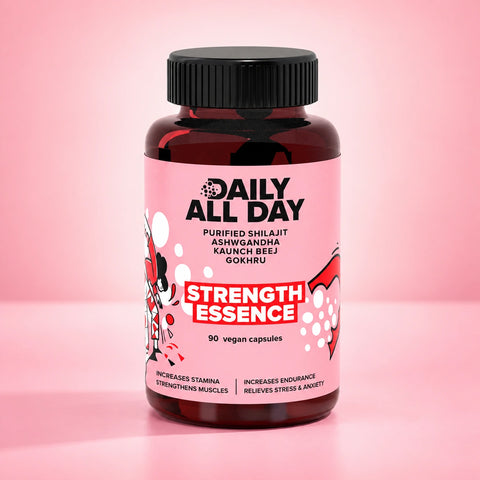
In brief: Ashwagandha tablets for stress and stamina in India work by lowering cortisol, the body's primary stress hormone, through active compounds called withanolides found in the root. Daily All Day's Strength Essence combines standardised Ashwagandha root with Shilajit and Kaunch Beej to support sustained energy, stamina, and mental calm for Indian adults.
Which Ashwagandha Tablet Works Best for Stress in India?
Table of Contents
- What is Ashwagandha?
- Ingredients Deep Dive
- How Does Ashwagandha Work?
- Science-Backed Health Benefits
- Common Forms and Usage
- Experiences from Real Users (Quora QnA)
- Ashwagandha Plant, Farming & Price Trends
- Frequently Asked Questions
It is 11 PM. You have just stepped off a packed Delhi Metro, dinner is still an hour away, and your shoulders have been locked tight since that 3 PM client call. Your body is wired and exhausted at the same time. If that sounds familiar, you are not alone. Searches for ashwagandha tablets for stress and stamina india have roughly doubled on Google India since 2022, with the peak happening right after Diwali season and before board-exam months. Yet most popular brands answer only half the question: they list benefits, but skip the practical details that actually matter to an Indian consumer. This post fills those gaps.
What is Ashwagandha?
| Other Names | Withania somnifera, Indian Ginseng, Winter Cherry, Ashwagandharishta, Ashwagandhamrita |
| Main Traditional Uses | Stress support, hormonal balance, immunity, muscle strength, cognitive function, heart and bone support |
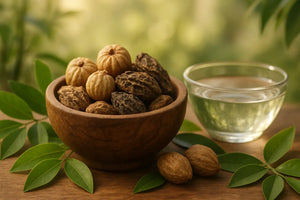
Ashwagandha (Withania somnifera) is a small shrub whose roots have been used in Ayurvedic tradition for over 3,000 years. The name loosely translates to "smell of horse," reflecting a traditional belief that regular use supports the strength and endurance of a horse. Grown mainly in Madhya Pradesh, Rajasthan, and parts of Maharashtra, the root contains a group of steroidal lactones called withanolides. These compounds are what modern research keeps returning to.
One important clarification many Indian buyers miss: ashwagandha sold as a dietary supplement under FSSAI is not the same as an AYUSH-licensed Ayurvedic medicine. A supplement can use traditional Ayurvedic framing and cite traditional use, but it cannot claim to treat or cure any condition. Strength Essence by Daily All Day is a FSSAI-registered nutraceutical supplement, not an AYUSH-licensed drug. That distinction matters for how you read claims on any label.
Ingredients Deep Dive: What Makes Ashwagandha Effective?
- Withanolides: The primary bioactive class. Withaferin A and related withanolides modulate the HPA (hypothalamic-pituitary-adrenal) axis, which governs your cortisol response.[1]
- Alkaloids: Support mood stability and energy metabolism.
- Saponins and Steroidal Lactones: Contribute antioxidant action and support the body's immune response.[2]
Strength Essence pairs standardised Ashwagandha root extract with two complementary ingredients from classical Ayurvedic formulation: Shilajit (a mineral-rich resin traditionally used for energy and vitality) and Kaunch Beej (Mucuna pruriens, a natural source of L-DOPA that may support dopamine pathways and physical endurance). The combination targets both the mental fatigue side and the physical stamina side of daily stress.
How Does Ashwagandha Work?
- Cortisol Regulation: Ashwagandha's withanolides interact with the HPA axis to help keep cortisol within a healthier range, especially under chronic stress.[3]
- Hormonal Support: Traditional Ayurvedic use and emerging research both note its role in supporting healthy testosterone levels in men and modest T4 thyroid support. (Note: if you already manage a thyroid condition, always check with your doctor before adding any supplement.)
- Antioxidant Activity: Reduces oxidative stress at the cellular level, which is particularly relevant given urban India's pollution exposure.
- Cardioprotective and Bone Support: Withaferin A has been studied for its role in supporting heart muscle recovery and bone density.[2]
Science-Backed Health Benefits
Here is a quick look at what peer-reviewed research currently supports, with study details so you can verify:
- Stress and Anxiety Support: A double-blind trial (published in Medicine, 2019, 58 participants) found that 240 mg of standardised ashwagandha root extract daily significantly reduced cortisol and self-reported stress scores versus placebo.[3]
- Sleep Quality: A 2021 study (Indian Journal of Psychological Medicine, 150 healthy adults) reported improved sleep onset and quality after 8 weeks of ashwagandha root extract supplementation.[1]
- Muscle Strength and Stamina: A 2015 randomised controlled trial (Journal of the International Society of Sports Nutrition, 57 male participants) found significant gains in muscle strength and recovery markers with 300 mg twice daily versus placebo.[4]
- Anti-inflammatory and Immune Support: Withanolides have demonstrated anti-inflammatory properties across multiple cell-line and small human studies.[5]
- Cholesterol Management Support: Withanolides from Withania species may contribute to healthy cholesterol management, though more large-scale Indian-population data is still needed.[6]
If you are a student managing exam pressure, the link between cortisol regulation and cognitive performance is particularly relevant. See our detailed post on Ayurvedic supplement support for student exam stress for more context.
And if chronic fatigue is your bigger complaint alongside stress, the combination of hidden micronutrient gaps and high cortisol is a common pattern in Indian urban adults. Our post on always feeling tired despite normal lab reports covers how Vita Blend and Strength Essence can be used as complementary daily support.
Common Forms, Usage, and Indian Meal Timing
This is where most competing pages stop short. They list dosage but never tell you when to take ashwagandha relative to your actual Indian meal schedule. Here is what the research and traditional use suggest:
- With food or after food: Ashwagandha root extract is best absorbed alongside a fat-containing meal. In practical Indian terms, that means after lunch (with your dal-chawal and a small amount of ghee) or after dinner. Taking it on an empty stomach can cause mild nausea in some people.
- Morning vs. night: If your primary goal is stamina and energy, a morning dose after breakfast works well. If your goal is stress relief and better sleep, an evening dose after dinner is the better fit. Strength Essence is designed for once or twice daily use, so you can split or take it as one evening dose depending on your goal.
- With dahi or warm milk: Classical Ayurvedic texts traditionally recommend ashwagandha with milk and honey. Modern supplements do not require this, but taking your capsule with warm milk at night is perfectly aligned with traditional practice and easy on the stomach.
- During festival eating cycles: Diwali and Eid periods mean heavier, later meals and disrupted sleep. Continuing your ashwagandha routine through these periods is fine and arguably more useful, since cortisol tends to spike with sleep disruption and overeating.
- Monsoon season: Ayurvedic seasonal practice (ritucharya) considers the monsoon (Varsha ritu) a period of lowered digestive fire and increased Vata imbalance. Adaptogenic support is traditionally considered appropriate in this season. Practically, the damp weather and mould-related fatigue many Mumbai and Kolkata residents experience make this a sensible time to stay consistent.
- Standard dosage range: 300 mg to 600 mg of standardised root extract daily. Follow the label on your specific product and consult a registered practitioner if you have any existing health condition.
30 / 60 / 90 Day Timeline: What to Realistically Expect
Ashwagandha is not a fast-acting stimulant. It works cumulatively. Here is a realistic timeline based on available research and user experience:
- 30 days: Most people report the first noticeable change is in sleep quality and the intensity of that wired-but-tired feeling in the evening. Cortisol begins to modulate. Physical stamina changes are subtle at this stage.
- 60 days: Stress reactivity tends to soften noticeably. You may find you recover faster from a difficult meeting or a late night. If you exercise, endurance and muscle recovery markers usually show measurable improvement around this point.
- 90 days: This is where the full picture becomes clear. Hormonal balance, sustained energy through the working day, and a more stable mood are the most commonly reported outcomes at 90 days of consistent use. Research trials typically run 8 to 12 weeks for this reason.
Consistency matters more than timing precision. Missing one day is fine. Missing two weeks resets much of the adaptation.
Experiences from Real Users (Quora QnA)
- Promotes Calm: "Ashwagandha helps promote relaxation as it is a natural adaptogen. It nourishes the nerves and improves nerve function to help you maintain calm." (Quora)
- Reduces Stress and Anxiety: "Ashwagandha is perhaps best known for its stress-relieving properties." (Quora)
- Boosts Mood and Energy: "Over time, you can see an increase in energy levels and a positive mood." (Quora)
- Ayurvedic Legacy: "Ashwagandha has been used in Ayurveda for thousands of years as a rejuvenative. Regular use helps overall health." (Quora)
- Quick Noticeable Effects: "Started with 1.5g before bed. Felt a remarkable difference in 4 to 5 days, and it continues to help." (Quora)
Ashwagandha Plant, Farming & Price Trends
- The Plant: A small shrub with oval leaves and red berries. Grows well in dry, well-drained soils. (ashwagandha ka paudha kaisa hota hai)
- Farming Regions: Primarily Madhya Pradesh, Rajasthan, and Maharashtra. Demand from supplement brands and export markets has made it one of the more profitable dry-region crops. (ashwagandha ki kheti)
- Root vs. Leaf: Most standardised supplements use the root, where withanolide concentration is highest. Some traditional preparations use the leaf. AYUSH-licensed Ayurvedic medicines and FSSAI dietary supplements may use different parts and different concentration standards, which is why the label and source matter. (ashwagandha root vs leaf ayush india)
- Price trends: Wholesale ashwagandha root price per kg has risen steadily since 2020 due to global demand. Quality extraction and standardisation add cost but also ensure consistent withanolide levels. (ashwagandha price per kg, ashwagandha rate)
Ready to try a formula built for Indian adults?
Try Strength Essence- Energy and Stamina Booster →Frequently Asked Questions
Should I take ashwagandha before or after Indian meals, and does ghee or dahi affect absorption?
Take ashwagandha after a meal that contains some fat, which is standard for most Indian meals that include ghee, dahi, or cooked dal with a tempering. Fat aids absorption of the fat-soluble withanolides. Taking it on a completely empty stomach (like first thing in the morning before chai) can cause mild nausea. After lunch or after dinner is the most practical timing for the majority of Indian eating patterns. Dahi or warm milk are fine accompaniments and are actually aligned with classical Ayurvedic preparation methods.
I take thyroid or blood pressure medication. Is it safe to use ashwagandha tablets alongside these?
This is a genuine concern for a large segment of Indian adults, since thyroid disorders and hypertension are among the most commonly managed conditions here. Ashwagandha has been shown to modestly support T4 thyroid levels, which could interact with thyroxine medication dosing. It may also have mild blood pressure-lowering effects. If you are already on levothyroxine, antihypertensives, or any immunosuppressant, consult your registered doctor or a qualified Ayurvedic practitioner before adding this or any supplement. Do not stop your existing medication.
Is ashwagandha safe to take during India's monsoon season, or should I pause in summer heat?
Traditional Ayurvedic seasonal guidance (ritucharya) considers adaptogens like ashwagandha appropriate year-round for most healthy adults, with no specific seasonal pause recommended. In peak summer, some practitioners suggest slightly lower doses since ashwagandha is considered mildly warming in Ayurvedic constitution theory. In practice, if you notice increased body heat or digestive discomfort in summer, reducing to the lower end of the dosage range (300 mg versus 600 mg) and taking it with cool milk at night is a sensible adjustment. Monsoon season, with its associated fatigue and sluggishness, is often considered a particularly suitable time to maintain consistent adaptogen use.
What is the difference between an FSSAI supplement and an AYUSH-licensed Ashwagandha medicine? Which one should I buy?
This confuses a lot of buyers. An AYUSH-licensed product (like certain Ayurvedic proprietary medicines) is regulated as a medicine under the Drugs and Cosmetics Act and can carry specific therapeutic claims. An FSSAI-registered dietary supplement (like Strength Essence) is regulated as a food product under FSSAI and can only use supportive language such as "may help maintain" or "traditionally used for." Neither is inherently superior for everyday wellness use. The practical difference is the claims on the label and the regulatory pathway. For general daily stress and stamina support, a well-formulated FSSAI supplement with standardised extract and transparent withanolide content is a sound choice. If you have a diagnosed condition, speak to a doctor or registered Ayurvedic practitioner about whether a licensed medicine is more appropriate for you.
Who should NOT take ashwagandha supplements?
The following groups should either avoid ashwagandha or get clearance from a registered doctor first: pregnant women (ashwagandha has traditionally been avoided in pregnancy, particularly in the first trimester, due to its uterine-stimulating properties in high doses); breastfeeding women; people with autoimmune conditions such as rheumatoid arthritis or lupus; anyone scheduled for surgery within two weeks (it may interact with anaesthesia); people with active hyperthyroidism; and those on sedative medications, since ashwagandha may enhance sedative effects. If you fall into any of these categories, please consult your doctor before starting. This is not optional caution, it is practical safety.
How long before I notice a real difference in stress levels and stamina?
Sleep quality and the sharpness of evening anxiety are usually the first things to shift, often within 2 to 3 weeks of consistent daily use. Physical stamina changes take longer, typically 6 to 8 weeks for meaningful improvement if you are also exercising regularly. Cortisol reduction, as measured in clinical trials, typically reaches statistical significance at the 8-week mark. In short, give it a genuine 60-day run before drawing conclusions. A few people notice quicker changes (the Quora accounts above mention 4 to 5 days), but these are likely individuals who were acutely sleep-deprived or highly stressed to begin with.