Can Daruhaldi Berberine Support Blood Sugar?
Share
Quick answer: Daruhaldi (Berberis aristata) contains berberine, an alkaloid that activates AMPK, an enzyme that helps cells use glucose more efficiently. This mechanism supports healthy blood sugar balance and insulin sensitivity. Gluco Wise- Blood Sugar Support by Daily All Day uses standardised Daruhaldi extract alongside Ceylon Cinnamon and Milk Thistle for metabolic support.
Can Daruhaldi Berberine Support Blood Sugar?
Table of Contents
- The Post-Diwali Reality Check
- What Is Daruhaldi (Berberis aristata)?
- Botanical and Physical Features
- Phytochemical Profile: What's Inside Daruhaldi?
- How Berberine Works: The Science
- Quality, Standardisation, and Safety
- Gluco Wise- Blood Sugar Support by Daily All Day
- What Indians Ask About Daruhaldi and Berberine
- Related Reads
- Frequently Asked Questions
The Post-Diwali Reality Check
You've just come through three weeks of mithai, late dinners, and zero routine. The festive glow has faded. Your energy is inconsistent, your mid-morning hunger is sharper than usual, and that fasting sugar reading is sitting a little higher than you'd like. Sound familiar?
For millions of urban Indians, this is not just a post-Diwali problem. It's a slow pattern, built by late metro dinners, long AC office hours, dal-rice-ghee-roti meals eaten at 10 PM, and desk jobs that leave very little room for movement. India now has one of the highest rates of type 2 diabetes and prediabetes in the world, with the Indian Council of Medical Research (ICMR) estimating over 101 million adults living with diabetes as of 2023.
That's where berberine blood sugar support India conversations have grown so sharply. And at the centre of them sits a Himalayan shrub called Daruhaldi (Berberis aristata), used in Ayurvedic practice for centuries and now drawing serious scientific attention.
What Is Daruhaldi (Berberis aristata)?
- Common Names: Daruhaldi, Indian Barberry, Tree Turmeric, Berberis aristata
- Origin: Native to the Himalayan foothills of India and Nepal, found between 1,800 and 3,000 metres altitude
- Traditional Use: Ayurvedic texts reference Daruhaldi for its bitter, drying (Tikta-Kashaya) properties, traditionally used to support liver function, digestion, and skin health
- Modern Focus: Primary source of berberine, a plant alkaloid now studied extensively for metabolic support
Daruhaldi is not turmeric, despite the name. The yellow colour comes from berberine, not curcumin. The two are distinct compounds with different mechanisms.
Botanical and Physical Features
- Plant Type: Deciduous thorny shrub
- Distinguishing Features: Spiny branches, small yellow flowers in clusters, oval leaves with serrated edges, and bright red berries in season
- Parts Used Medicinally: Roots, stem bark, and occasionally leaves
- Colour Marker: A deep golden-yellow cross-section, caused by berberine concentration in the root and bark tissue
Phytochemical Profile: What's Inside Daruhaldi?
The metabolic and blood sugar-related benefits of Daruhaldi trace back to a specific group of isoquinoline alkaloids:
- Berberine (the primary active compound for glucose and lipid metabolism)
- Berbamine (studied for immune-modulating properties)
- Palmatine (supports liver enzyme activity)
- Oxyberberine and Jatrorrhizine (antimicrobial activity)
- Supporting compounds: tannins, flavonoids, and phenolic acids
Reliable supplements use HPLC (High-Performance Liquid Chromatography) testing to verify the exact berberine content in each batch.[1] Without this, you cannot confirm potency or consistency.
How Berberine Works: The Science Behind Berberine Blood Sugar Support India
This is the section most Indian health sites skip. They tell you berberine "supports blood sugar" without explaining the mechanism. Here is what the research actually shows.
The AMPK Pathway
Berberine activates an enzyme called AMP-activated protein kinase (AMPK), sometimes called the body's "metabolic master switch." When AMPK is activated, cells take up glucose more readily, the liver reduces excess glucose production, and insulin sensitivity improves. A 2008 clinical trial published in Metabolism (116 participants with type 2 diabetes) found berberine reduced HbA1c by approximately 2% and fasting blood glucose significantly over 3 months, comparable to metformin in that study population.[2]
That said, berberine is a dietary supplement ingredient in India, regulated under FSSAI, not a licensed medicine. It supports healthy metabolic function. It does not treat or diagnose any condition.
What About Indian Diets Specifically?
This matters more than most supplement brands acknowledge. Indian diets tend to be high in refined carbohydrates: white rice, maida rotis, sugary chai, and fried festival foods. Berberine's AMPK activation is particularly relevant in this context because it works on glucose uptake at the cellular level, not just on fasting numbers. Pairing berberine supplementation with meals heavy in dal, sabzi, and whole grains (rather than maida or sugar) may support better results, though individual responses vary.
Ghee, a staple in Indian cooking, does not appear to inhibit berberine absorption in available research. Dahi (curd) consumed alongside meals is unlikely to interfere. High-fat, high-fibre meals may slightly slow absorption, so many practitioners suggest taking berberine 20 to 30 minutes before your main meals.
For more on how berberine may support liver health alongside blood sugar, see our post on Can Berberine Support Fatty Liver and Blood Sugar?
Anti-Inflammatory and Lipid Support
Beyond glucose, berberine has shown benefits for LDL cholesterol and triglycerides in multiple studies.[1] Chronic low-grade inflammation, common in people with insulin resistance, also appears to reduce with regular use. These are supporting benefits, not the primary claim.
Quality, Standardisation, and Safety
Not all Daruhaldi supplements are equal. This is where the FSSAI vs AYUSH distinction matters for the Indian buyer.
Gluco Wise- Blood Sugar Support by Daily All Day is an FSSAI-registered dietary supplement, not an AYUSH-licensed medicine. This means it is regulated as a food product for health maintenance, not as a drug for treating any condition. Some brands market their products under AYUSH branding, which implies a different regulatory pathway and different claims. If you see a brand claiming their berberine product "treats diabetes" or is "AYUSH approved for diabetes," that framing goes beyond what supplement regulations permit. Be cautious.
For safety, each batch of Gluco Wise uses HPLC-standardised Berberis aristata extract, ensuring consistent berberine concentration.
Who Should Not Take Daruhaldi Supplements
- Pregnant or nursing women: Berberine has shown uterine-stimulating effects in animal studies. Avoid unless a registered doctor specifically advises otherwise.
- Children under 12: Insufficient safety data for this age group.
- People on metformin, insulin, or blood pressure medication: Berberine may potentiate the effect of these medicines, increasing the risk of low blood sugar or low blood pressure. Consult your doctor before combining.
- Post-surgery recovery: Berberine may affect blood sugar regulation during recovery. Pause use until cleared by your surgeon.
- Thyroid medication users: Some evidence suggests berberine may reduce thyroid hormone levels slightly. If you take levothyroxine, check with your endocrinologist first.
Gluco Wise- Blood Sugar Support by Daily All Day
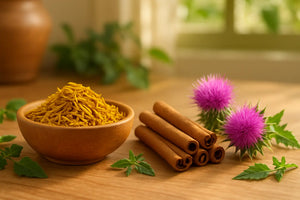
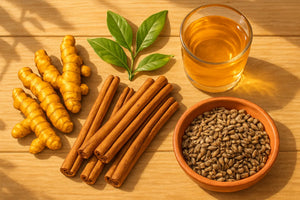
Gluco Wise combines three well-researched ingredients: standardised Daruhaldi (Berberis aristata) extract, Ceylon Cinnamon, and Milk Thistle. Each ingredient targets a different part of the metabolic picture.
- Daruhaldi berberine activates AMPK to support glucose uptake and insulin sensitivity
- Ceylon Cinnamon (not Cassia) supports post-meal glucose response via insulin receptor sensitivity
- Milk Thistle (Silymarin) supports liver function, important because the liver plays a central role in glucose regulation
This combination is relevant for Indian adults managing post-meal sugar spikes, metabolic support during festive eating cycles, or long-term healthy blood sugar maintenance. If PCOS is part of your picture, our piece on PCOS, Acne, and Sugar Crashes: How Gluco Wise May Help Indian Women covers the hormonal-metabolic connection in more detail.
The 30 / 60 / 90 Day Timeline: What to Realistically Expect
Results are gradual. Here is a realistic picture based on available research and general supplement timelines:
30 days: Most users notice steadier energy after meals, reduced mid-morning crashes, and less intense sugar cravings. Post-meal heaviness (common after rice-heavy lunches) may ease. Fasting sugar numbers may not have shifted yet.
60 days: By 60 days, if dietary habits have not worsened, fasting glucose and post-meal glucose readings often begin to reflect a positive trend. Some users notice improved sleep quality. Cholesterol panel changes may also start to appear.
90 days: The most meaningful window. A 90-day HbA1c check (which reflects 3-month average blood sugar) is the clearest indicator of sustained progress. The 2008 clinical trial cited above used a 3-month period as its primary endpoint for a reason. This is when the AMPK activation effect is most measurable.
Consistency matters more than dose. Taking Gluco Wise irregularly produces inconsistent results.
What Indians Ask About Daruhaldi and Berberine
Real questions from Indian communities online:
- What are the benefits of Berberis aristata (Daruhaldi) in diabetes? Daruhaldi's berberine supports healthy glucose metabolism via AMPK activation and may help maintain post-meal blood sugar balance. It is a supplement, not a diabetes medicine.
- Is berberine safe for long-term use for blood sugar? Available research suggests it is generally well-tolerated for 3 to 6 month periods in healthy adults. Long-term use beyond this should be discussed with a doctor, particularly for anyone on prescription medication.
- Which is better: Berberis aristata or Milk Thistle for liver support? They work differently. Milk Thistle (silymarin) protects liver cells from oxidative damage. Daruhaldi berberine supports the liver's glucose regulation function. Together, as in Gluco Wise, they address complementary aspects of liver-metabolic health.
Related Reads
- Can Berberine Support Fatty Liver and Blood Sugar?
- Gurmar: The Ayurvedic Herb for Sugar Cravings and Gut Health
- PCOS, Acne, Facial Hair, and Sugar Crashes: Gluco Wise for Indian Women
Frequently Asked Questions
Should I take Gluco Wise before or after Indian meals? Does timing matter?
Timing does matter. For berberine to support post-meal glucose response effectively, most practitioners suggest taking it 20 to 30 minutes before your two main meals of the day, typically lunch and dinner. For Indian meal patterns, this means before your dal-rice or roti-sabzi meal, not after. Taking it after a meal reduces its window to act on glucose uptake. If you eat late (a common reality for people commuting in metros), take it just before you sit down to eat, even if that's 9 or 10 PM.
I take metformin for blood sugar. Can I add Daruhaldi berberine at the same time?
This is one of the most important questions to get right. Berberine and metformin work through overlapping mechanisms (both influence glucose metabolism and AMPK). Taking both together may increase the blood sugar-lowering effect more than intended, raising the risk of hypoglycaemia (low blood sugar). Do not combine without consulting your endocrinologist or physician first. The same applies to insulin users. Your doctor may adjust your medication timing or dose if they recommend adding berberine supplementation.
Is Gluco Wise an AYUSH medicine or an FSSAI supplement? What's the difference for the Indian buyer?
Gluco Wise is an FSSAI-registered dietary supplement, not an AYUSH-licensed medicine. The difference matters practically. An AYUSH-licensed product has gone through a specific traditional medicine approval pathway and can make certain therapeutic claims. An FSSAI supplement is regulated as a food product that supports normal health functions. Gluco Wise supports healthy blood sugar balance and metabolic function. It does not diagnose, treat, or manage diabetes as a medical condition. If you see any supplement claiming to "cure" or "treat" diabetes, that is not permissible under either FSSAI or AYUSH supplement regulations. Always check labels carefully.
Does berberine work differently in summer versus the monsoon season in India?
There is no direct clinical data on berberine's seasonal efficacy in Indian climatic conditions, but a few practical points apply. In peak summer (April to June), increased sweating and dehydration can concentrate blood sugar and affect how supplements are absorbed. Stay well-hydrated. During monsoon months, gut health tends to fluctuate for many Indians (water quality, food hygiene shifts, increased infections). Since berberine also supports gut microbiome balance, some users find it particularly useful during this period. Ayurvedic seasonal frameworks (Ritucharya) do suggest adjusting digestive support during Varsha Ritu (monsoon), and Daruhaldi's bitter properties are traditionally considered useful for this season. Speak with an Ayurvedic practitioner if you follow a seasonal routine.
I have hypothyroidism and take levothyroxine. Is Daruhaldi berberine safe for me?
Some research suggests berberine may modestly reduce thyroid hormone levels (T3 and T4) in certain individuals. If you are already on levothyroxine for hypothyroidism, adding berberine without medical guidance could potentially affect your thyroid levels. This does not mean you cannot take it, but it does mean you should check with your endocrinologist before starting. Get a thyroid panel done before and after 60 days if you do begin, so your doctor can track any changes.
Who else should avoid Daruhaldi berberine supplements entirely?
Beyond thyroid and diabetes medication interactions, avoid without doctor consultation if you are: pregnant or nursing (berberine shows uterine-stimulating effects in animal studies and its safety in human pregnancy is not established); under 12 years of age; recovering from any surgery in the past 4 weeks; or taking anticoagulants (blood thinners). People with known allergies to Berberis species should also avoid it. If you have chronic kidney or liver conditions, consult a registered doctor before use.