Can Ashwagandha Tablets Relieve IT Burnout Stress?
Share
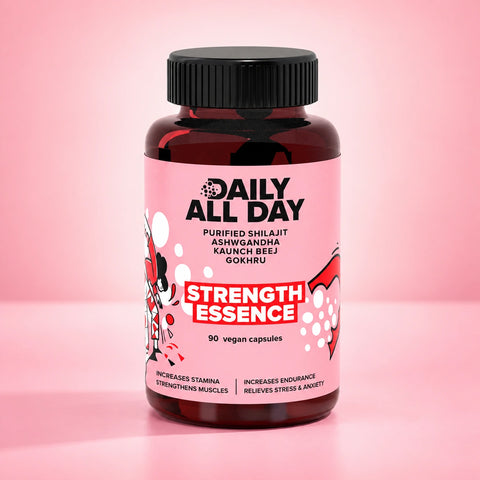
In brief: Ashwagandha tablets for stress relief in India work by supporting your body's cortisol regulation through withanolides, the active compounds in Withania somnifera. Traditionally used in Ayurveda as a Rasayana herb, ashwagandha may help reduce fatigue and support stamina. Daily All Day's Strength Essence combines ashwagandha with Shilajit and Kaunch Beej for sustained energy and stress resilience.
Can Ashwagandha Tablets Relieve IT Burnout Stress?
Table of Contents
- Bangalore IT Burnout: Why Is It Happening?
- Adaptogens Meaning & How They Work
- Ingredients Deep Dive: Ashwagandha, Shilajit, Kaunch Beej, and More
- Quora Q&A: Real-life Stress and Adaptogen Solutions
- Ashwagandha Tablets for Stress Relief in India
- Practical Tips for Stress-Free Tech Life
- Frequently Asked Questions
Bangalore IT Burnout: Why Is It Happening?
It's 11 PM. Your standup was at 9 AM, your last Slack ping came in at 10:47 PM, and you've had three cups of chai since dinner. Sound familiar? For a large share of India's tech workforce, this is Tuesday.
A 2024 study of 310 IT employees across Bengaluru, Hyderabad, and Pune found that 62% reported persistent emotional exhaustion, with women in senior roles disproportionately affected.[1] The culprits are well-known: long commutes before WFH, now replaced by zero-separation WFH; back-to-back video calls; late dinners after 9 PM sprints; and monsoon months that flatten energy further due to reduced sunlight and disrupted sleep cycles.
Burnout isn't just tiredness. It's a sustained cortisol overload that chips away at mood, focus, and physical resilience. And that's exactly where the search for ashwagandha tablets for stress relief in India begins for most people.
If you've been wondering the same, this Quora thread from tech workers in similar situations puts the shared experience into plain words.
Adaptogens: What the Word Actually Means
Adaptogens are plant-based substances that help your body regulate its stress response more efficiently, without overstimulating or sedating it. Think of them less like a switch and more like a thermostat.
They work primarily on the HPA axis (hypothalamic-pituitary-adrenal axis), the system that decides how much cortisol your body releases under pressure. A 2025 review of 18 randomised controlled trials found adaptogenic herbs significantly modulated salivary cortisol in adults with chronic occupational stress.[2]
No jitters. No afternoon crash. That's the key difference from caffeine.
Popular adaptogens used in Indian and global wellness contexts include:
- Ashwagandha (Withania somnifera): supports cortisol balance, traditionally used in Ayurveda for Vata-related exhaustion.
- Shilajit: a mineral-rich resin from the Himalayas, traditionally used to support physical endurance and mitochondrial energy.
- Kaunch Beej (Mucuna pruriens): traditionally used to support dopamine pathways and mental motivation.
- Tulsi (Holy Basil): an everyday Ayurvedic herb, well-known for calming the nervous system.
Curious about how adaptogens actually function at a biochemical level? This Quora discussion covers the mechanism in accessible detail.
Ingredients Deep Dive: What's Inside Strength Essence
Most ashwagandha tablets for stress relief in India list the herb on the label and stop there. Here's what the research actually says about each ingredient in Daily All Day's Strength Essence.
Ashwagandha (Withania somnifera)
The withanolide compounds in ashwagandha root are the active agents. A 2023 double-blind RCT of 60 adults (published in an Indian peer-reviewed journal) found that 300 mg of KSM-66 ashwagandha root extract twice daily for 8 weeks significantly supported lower perceived stress scores compared to placebo.[3] This is relevant because Strength Essence uses root extract, not leaf powder, which matters for withanolide concentration.
In Ayurvedic tradition, ashwagandha is classified as a Rasayana herb, used to restore vitality and support the nervous system in people with Vata imbalance. Urban professionals, especially those in high-screen, low-movement jobs, are considered particularly prone to Vata aggravation during winter and late monsoon seasons.
Shilajit
Rich in fulvic acid and over 80 trace minerals, Shilajit has been traditionally used across Ayurvedic and Unani systems for physical stamina. A 2019 study of 63 healthy male volunteers found that purified Shilajit at 250 mg twice daily helped maintain muscle strength and reduce fatigue markers after exercise stress.[4] For desk workers whose fatigue is more mental than physical, the combination with ashwagandha provides complementary support.
Kaunch Beej (Mucuna pruriens)
Kaunch Beej is a natural source of L-DOPA, a precursor to dopamine. Low dopamine is associated with low motivation, brain fog, and the emotional flatness that characterises late-stage burnout. Traditional Ayurvedic use of Kaunch Beej targets exactly this kind of mental depletion.[5]
Gokhru (Tribulus terrestris)
Used in Ayurveda to support kidney function and physical vitality. It complements the energy-support role of Shilajit in this formulation.[6]
Want to read what other people dealing with anxiety have experienced with adaptogenic herbs? This Quora thread on adaptogenic herbs for anxiety is worth a read, and this one on burnout recovery supplements gives useful first-person context.
What Indian Professionals Are Actually Asking
Real questions from real people navigating stress at work:
-
Q: What are the best ways to manage stress and prevent burnout in a demanding job?
Beyond supplements, structure and boundaries matter enormously. See practical strategies here. -
Q: Can you recommend supplements for burnout recovery?
Ashwagandha consistently appears at the top of community recommendations. Read user experiences here. -
Q: What herbs have helped with anxiety?
Ashwagandha, tulsi, and Mucuna pruriens come up repeatedly. Discussion here. -
Q: Advice for a tech worker feeling completely overwhelmed?
The answers here are grounded and honest, and worth reading before deciding on any supplement.
Ashwagandha Tablets for Stress Relief in India: How to Take Strength Essence
Three things the top-ranked product pages in India consistently skip: meal timing, seasonal adjustments, and what "results" actually look like week by week.
Meal Timing and the Indian Diet Context
Ashwagandha is fat-soluble, meaning it absorbs better when taken with food containing some healthy fat. For most Indian households, this means after lunch (with dal-chawal or sabzi-roti containing ghee) or after dinner. Taking it on an empty stomach, which many people do with their morning chai, reduces absorption and can occasionally cause mild gastric discomfort.
Recommended use for Strength Essence: 1 capsule twice daily, after meals, preferably with your main meals (lunch and dinner). If you eat a light breakfast and a heavy lunch, lunch + dinner timing works well for most people.
During festival seasons (Navratri fasting, Karwa Chauth, Ramzan), if your meal schedule shifts significantly, stick to the capsule closest to your largest meal of the day. Don't skip entirely.
Seasonal Consideration
Ayurveda's ritucharya (seasonal routine) framework suggests ashwagandha is particularly beneficial during Sharad (autumn, roughly October to November) and Hemant (early winter, November to January), when Vata is most aggravated. During peak summer months, if you notice increased body heat, consult a qualified Ayurvedic practitioner about continuing or adjusting your dose.
30 / 60 / 90 Day Timeline: What to Expect
30 days: Most people notice subtle improvements first: slightly less mental fog by mid-afternoon, marginally better sleep quality, and a reduction in the "wired but tired" feeling by end of week 3. Don't expect dramatic changes. Adaptogens work gradually.
60 days: Cortisol-related patterns begin to stabilise. Mood swings related to work pressure may feel less sharp. Physical stamina during exercise or even long commutes tends to improve. This is also when the Shilajit and Kaunch Beej combination shows more noticeable effects on motivation and mental drive.
90 days: The cumulative effect of consistent use typically shows in sustained energy levels across the day, better stress tolerance during high-pressure work cycles (appraisal season, sprint deadlines), and improved sleep depth. This is the recommended minimum period for a fair assessment of adaptogenic supplements.
Practical Tips That Actually Fit an Indian Tech Life
- Walk 10 minutes after dinner instead of opening your laptop again. It helps digestion and lowers evening cortisol.
- Your 4 PM chai is fine. Just don't make it a double-shot coffee. Cortisol peaks again around 4 PM, and caffeine on top amplifies the stress response.
- AC office air and long screen hours dehydrate you faster than you think. Drink water, not just chai.
- During festival weeks when eating patterns go haywire (Diwali mithai overdose is real), your gut-brain axis takes a hit. Stay consistent with your supplement routine even when food patterns shift.
- If you're also dealing with joint stiffness from long desk hours, you might find it useful to read about joint care support for Indian men in sedentary roles.
- And if screen fatigue is affecting your skin and sleep simultaneously, this piece on Sea Buckthorn and Omega 3-6-9 for Indian night owls covers inside-out support worth knowing about.
Try Strength Essence- Energy and Stamina Booster →
Frequently Asked Questions
Should I take ashwagandha tablets before or after meals, given typical Indian meal timings?
Take Strength Essence after your two main meals (typically lunch and dinner in Indian households). Ashwagandha's active compounds, the withanolides, are fat-soluble and absorb better alongside food containing healthy fats like ghee, dahi, or cooked dal with oil. Taking it on an empty stomach, such as with morning chai before breakfast, can reduce absorption and occasionally cause mild stomach discomfort. If your meal schedule shifts during fasting periods (Navratri, Karwa Chauth, Ramzan), take the capsule closest to your largest meal of the day.
Is Strength Essence an FSSAI-regulated product or an AYUSH-licensed medicine? What's the difference?
Strength Essence is a dietary supplement regulated under FSSAI (Food Safety and Standards Authority of India), not a licensed AYUSH medicine. This means it is positioned as a food supplement to support general wellness, not as a drug to treat or diagnose any condition. AYUSH-licensed products go through a separate licensing process under the Ministry of AYUSH and carry different label claims. When you see "FSSAI registered" on a supplement, it confirms the product meets food safety standards. It does not mean it is AYUSH-approved or a pharmaceutical drug.
I'm on thyroid medication or blood pressure tablets. Can I still take ashwagandha tablets for stress relief?
This is important. Ashwagandha may influence thyroid hormone levels, and some studies suggest it can support thyroid function in people with subclinical hypothyroidism. If you are already on thyroid medication (levothyroxine, for example), adding ashwagandha without medical guidance could affect your hormone balance. Similarly, if you are on antihypertensive medication, consult your doctor before starting, as ashwagandha may have a mild blood-pressure-modulating effect. Please speak with a registered medical doctor or qualified Ayurvedic practitioner before combining Strength Essence with any ongoing prescription medication.
Can women take ashwagandha tablets during pregnancy or while breastfeeding?
No. Ashwagandha is not recommended during pregnancy. Traditional Ayurvedic texts and current safety literature both advise against its use in pregnancy due to its potential uterine-stimulating properties. If you are breastfeeding, consult a registered doctor before starting any supplement, including Strength Essence. This applies to all trimesters and the postpartum nursing period.
Does ashwagandha work differently in summer versus monsoon in India?
Ayurveda's seasonal framework (ritucharya) considers ashwagandha most suitable during autumn and early winter, when Vata dosha is most active and stress-related fatigue tends to peak. During Indian summers (April to June), high Pitta conditions may mean some people experience increased body warmth when taking warming adaptogens like ashwagandha. If you notice increased heat, acidity, or skin flare-ups during peak summer while taking Strength Essence, reduce the dose to once daily and consult a qualified Ayurvedic practitioner. Monsoon months are generally well-suited to ashwagandha use for most people.
How long before I actually notice a difference with Strength Essence?
Adaptogens are not fast-acting stimulants. Most people notice subtle changes by 30 days: slightly better afternoon focus, less of the "wired but tired" feeling, and marginally improved sleep quality. By 60 days, cortisol-related mood fluctuations tend to feel less sharp. The fuller benefit on stamina, mental motivation, and stress tolerance typically becomes clear around 90 days of consistent daily use. If you see no change after 90 days, review your overall sleep, diet, and stress management routine alongside your supplement intake.