Does Ashwagandha Really Reduce Stress and Anxiety?
Quick answer: Ashwagandha supports stress and anxiety relief in Indian adults by helping regulate cortisol through its active withanolides, which work on the HPA axis. Used traditionally in Ayurveda and backed by modern research, it is the core adaptogen in Daily All Day's Strength Essence- Energy and Stamina Booster, designed for sustained, daily use.
Does Ashwagandha Really Reduce Stress and Anxiety? A Practical Guide for India
Table of Contents
It is 11 PM. You just got back from a long commute, your dinner is reheated dal-rice, and your laptop is still open with tomorrow's deliverables. Your jaw is tight. Sleep feels three hours away. This is not exam stress or a one-off bad week. For millions of urban Indians juggling WFH pressure, metro commutes, and post-festival sleep debt, this is Tuesday.
Ashwagandha for stress and anxiety in India has been talked about for decades in Ayurveda and is now getting serious attention in modern research too. But most of what you find online is generic. It does not tell you when to take it around an Indian meal schedule, how it interacts with thyroid or BP medications (both extremely common in India), or what the difference is between an FSSAI-registered supplement and an AYUSH-licensed medicine. This guide covers all three.
What Exactly is Ashwagandha?
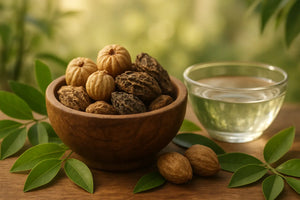
Ashwagandha (Withania somnifera) is a small shrub native to India, grown widely in Madhya Pradesh, Rajasthan, and Gujarat. The root is the part that matters. In classical Ayurveda, it is classified as a Rasayana, a category of herbs traditionally used to support vitality, mental clarity, and resilience over time.
The term "adaptogen" is how modern science describes what Ayurveda always meant. An adaptogen helps your body respond to physiological and psychological stress without tipping into overdrive. Ashwagandha is one of the most studied adaptogens globally, and several of those studies have been conducted on Indian populations, which makes the evidence directly relevant to you.
It is worth clarifying one thing that confuses many Indian buyers: ashwagandha supplements sold as nutraceuticals (like Strength Essence) are registered under FSSAI, India's food safety authority. They are not AYUSH-licensed medicines. This means they are positioned as dietary supplements that support wellbeing, not as treatments for any condition. Both categories are legal and legitimate. They serve different purposes.
The Science Behind Withanolides and Cortisol
The active compounds in ashwagandha are called withanolides, a group of steroidal lactones found primarily in the root. These are plant-based, not synthetic. The most studied among them is Withaferin A.
Here is what the research actually shows, with study specifics:
- A 2012 randomized, double-blind, placebo-controlled trial published in the Indian Journal of Psychological Medicine (n=64 adults with chronic stress) found that participants taking 300 mg of ashwagandha root extract twice daily for 60 days showed significantly lower serum cortisol and self-reported stress scores compared to the placebo group.[1]
- A 2019 study in Medicine (n=60 adults) found that 240 mg of standardized ashwagandha extract daily for 60 days reduced cortisol levels and improved sleep quality and anxiety scores.[2]
- A 2021 randomized trial in PLOS ONE (n=50 healthy adults under occupational stress) confirmed that withanolide-standardized ashwagandha extract at 300 mg twice daily reduced perceived stress and morning cortisol over 8 weeks.[3]
The mechanism works through the HPA (hypothalamic-pituitary-adrenal) axis. Withanolides modulate how your brain signals the adrenal glands to release cortisol. Less unnecessary cortisol means less baseline anxiety, better sleep architecture, and less of that wired-but-tired feeling that many urban Indian professionals know well.
Withanolides also appear to support GABA receptor activity, which partly explains the calming effect. Think of GABA as your brain's natural "settle down" signal. Ashwagandha does not sedate you. It helps your own nervous system do its job better.
Top Benefits of Ashwagandha for Indian Adults
1. Supports Cortisol Balance and Stress Response
This is the most evidence-backed benefit. Ashwagandha for stress and anxiety in India is not a new idea. It is a 3,000-year-old Ayurvedic application now confirmed by multiple controlled trials. The key is consistency, not a single dose.
2. May Help with Sleep Quality
Ashwagandha does not knock you out. What it does is lower the physiological arousal that keeps you staring at the ceiling. Several trials show improvement in sleep onset and sleep quality, particularly in people with stress-related insomnia. For late-night WFH workers or shift professionals in metros, this is especially relevant.
3. Supports Cognitive Focus
Post-COVID brain fog is a real concern for many Indian adults right now. Ashwagandha has shown preliminary support for reaction time, attention, and working memory in a 2014 study (n=20, Journal of Dietary Supplements). If you are looking for more on this, see our post on Persistent Brain Fog After COVID, which covers the Vita Blend and Stress Free combination for long-haul fatigue support.
4. Physical Stamina and Muscle Recovery
A 2015 study in the Journal of the International Society of Sports Nutrition (n=57 male subjects) found that ashwagandha supplementation was associated with significantly greater muscle strength and recovery compared to placebo. This is why Strength Essence combines ashwagandha with Shilajit and Kaunch Beej, targeting both mental and physical resilience. Readers training under stress may also find this useful: Chasing PRs on Weak Sleep: Strength Essence and Stress Free as Daily Support for Indian Men Training Under Stress.
5. Supports Immunity Over Time
Traditionally used in Ayurvedic seasonal transitions (ritucharya), ashwagandha is often recommended during the shift from monsoon to winter, when immunity tends to dip for many Indians. Modern research supports a mild immunomodulatory role, though this is a supportive function, not a treatment for any condition.
How to Take It with Indian Meals and Timings
This is the gap almost no article addresses. Most dosage guides are built around Western meal structures. Indian meal timing is different, and it matters.
Best timing for ashwagandha in an Indian routine:
- With breakfast (7–9 AM): If you eat a cooked breakfast (paratha, poha, idli, eggs), taking ashwagandha with this meal is ideal. Food buffers any mild gastric sensitivity and improves absorption of fat-soluble withanolides. Pair with a small amount of ghee or full-fat dahi for better uptake.
- With dinner (8–10 PM): Many Indians eat their main meal late. Taking ashwagandha at dinner suits this pattern well, as it supports the cortisol drop that naturally happens before sleep. Avoid taking it on an empty stomach late at night.
- With warm milk: The classical Ayurvedic method is ashwagandha in warm milk before bed. This remains valid. The fat in milk supports withanolide absorption, and the warmth supports sleep onset.
What to avoid: Do not take it with chai or coffee. Caffeine can counteract the calming mechanism. Avoid taking it immediately after a very heavy Diwali or Eid feast meal when digestion is already taxed.
For Strength Essence capsules specifically, take one or two capsules after a meal, once or twice daily, as directed on the pack. Do not exceed the stated dose without consulting a qualified Ayurvedic practitioner or your doctor.
What to Expect: 30, 60, and 90 Days
Ashwagandha is not a quick fix. It works cumulatively. Here is a realistic timeline:
30 days: Most people notice subtle shifts. Sleep feels slightly deeper. The 3 PM slump may be less sharp. Mornings feel marginally less heavy. Do not expect dramatic changes yet. Your cortisol rhythm is just beginning to recalibrate.
60 days: This is where most clinical trials see statistically significant results. Stress scores drop more noticeably. You may find yourself responding to pressure rather than reacting to it. Physical recovery after workouts or long work weeks also tends to improve around this point.
90 days: Sustained use shows the clearest benefits for energy, mood stability, and cognitive sharpness. The 2012 Indian study cited above ran for exactly 60 days and showed significant results. Most Ayurvedic practitioners recommend a full 90-day course before evaluating whether to continue or take a short break.
Consistency matters more than timing. Missing a few days does not reset you, but skipping most days means the withanolides never build to effective levels in your system.
Try Strength Essence- Energy and Stamina Booster →What People on Quora Are Asking
Does ashwagandha really help with anxiety?
The short answer: yes, with nuance. Multiple controlled trials show it reduces self-reported anxiety and lowers cortisol levels. It works best for stress-driven anxiety rather than clinical anxiety disorders. If you have been diagnosed with GAD or panic disorder, please consult a psychiatrist or doctor before relying on any supplement as a standalone approach. For everyday stress and background anxiety common in urban Indian life, ashwagandha has solid supportive evidence.
How long does it take to feel the effects of ashwagandha?
Subtle improvements in sleep and mood often appear within 2–4 weeks. More meaningful reductions in stress and improved physical performance typically take 6–12 weeks of daily use. The 30/60/90 day framework above gives you a realistic sense of what to watch for at each stage.
Who Should Be Careful?
Ashwagandha is well-tolerated by most healthy adults. But certain groups need to pause before starting:
- Pregnancy and breastfeeding: Avoid entirely. Ashwagandha has uterine-stimulating properties noted in traditional texts and some pharmacological research. Consult your OB-GYN or a registered Ayurvedic practitioner before using any adaptogen during pregnancy or nursing.
- Thyroid conditions: Ashwagandha may raise T3 and T4 levels. If you have hyperthyroidism or are on levothyroxine or other thyroid medications (extremely common in Indian women above 30), check with your endocrinologist first. Dose adjustment may be needed.
- Blood pressure medications: Ashwagandha has a mild hypotensive effect. If you are on antihypertensives (amlodipine, telmisartan, and similar), taking ashwagandha alongside may require monitoring. Speak to your physician.
- Autoimmune conditions: It stimulates immune activity. People with rheumatoid arthritis, lupus, or Hashimoto's should consult a doctor before use.
- Pre-surgery: Stop use at least two weeks before any scheduled surgery, as it may affect CNS response to anaesthesia.
- Acute liver conditions: Though rare, high-dose use has been associated with liver enzyme changes in isolated case reports. Stick to recommended doses.
The practical rule: if you take any daily prescription medication in India, spend two minutes checking with your doctor or pharmacist before adding any supplement, including this one.
Strength Essence by Daily All Day
Strength Essence combines ashwagandha root extract (standardized for withanolides) with Shilajit and Kaunch Beej. This combination targets both the mental load (stress, sleep, focus) and the physical side (stamina, muscle recovery, morning energy) that most Indian adults need support with simultaneously.
It is an FSSAI-registered dietary supplement, not an AYUSH-licensed medicine. It supports your body's natural functions. It does not treat, cure, or diagnose any condition.
If you are rebuilding resilience after illness, hair loss post-fever, or nutritional gaps from a demanding period, you may also find this relevant: Hair Fall After Viral Fevers, Late Nights, and Crash Diets: Strength Essence and Vita Blend as Daily Support for Indian Young Adults Rebuilding Resilience.
Try Strength Essence- Energy and Stamina Booster →
Frequently Asked Questions
Can I take ashwagandha right after a heavy Indian dinner, or does it need an empty stomach?
Take it with food, not on an empty stomach. Withanolides are fat-soluble, so a meal with some fat (dal with ghee, curd rice, paneer sabzi) actually improves absorption. A heavy meal is fine. What to avoid is taking it immediately before bed on a completely empty stomach, which can cause mild nausea in sensitive individuals. With dinner or warm milk before sleep works well for most people.
I am on thyroid medication (levothyroxine). Is ashwagandha safe for me?
Not without checking first. Ashwagandha may raise T3 and T4 levels, which can interact with thyroid hormone replacement therapy. Thyroid conditions are very common in Indian women, and this is one of the most important safety considerations for ashwagandha use in India. Please consult your endocrinologist or physician before starting. They may want to monitor your thyroid panel if you do begin supplementation.
Is Strength Essence an AYUSH medicine or an FSSAI supplement? What is the difference?
Strength Essence is registered under FSSAI as a dietary nutraceutical supplement, not as an AYUSH-licensed medicine. AYUSH-licensed products are regulated as medicines and can make specific therapeutic claims. FSSAI supplements are positioned to support general health and wellbeing. Both are legal categories in India. The key difference is the regulatory pathway and the level of clinical claims permitted. As a supplement, Strength Essence supports your body's natural functions rather than treating any condition.
Does ashwagandha work differently in summer versus monsoon in India?
Classical Ayurveda does factor seasonal use (ritucharya) into supplement recommendations. Ashwagandha is traditionally considered warming (ushna virya) in its action. In peak Indian summer (April to June), some Ayurvedic practitioners suggest pairing it with cooling foods like milk or coconut water to balance this effect. In monsoon and winter, it is generally considered well-suited for daily use without modification. If you run hot constitutionally (Pitta prakriti) and find you feel more irritable or develop acne with ashwagandha in summer, reduce the dose or time it to evenings rather than mornings.
I have been taking it for three weeks and feel nothing. Should I stop?
Three weeks is within the normal waiting window. Most controlled trials show measurable results at 60 days, not 21 days. Subtle shifts (slightly calmer mornings, marginally better sleep) may already be happening without being obvious. Give it the full 30-day mark before deciding, and look for quiet signs rather than dramatic ones. If you are at 45 days with no change at all, check your dose, confirm you are taking it with food, and consider whether your stress load is extremely high or there is an underlying issue worth discussing with a doctor.
Can ashwagandha be taken during Navratri fasting or other Indian fasting periods?
Most ashwagandha capsule formulations contain root extract and standard excipients. Whether they are considered permissible during fasting (Navratri, Ekadashi, Karwa Chauth) depends on your personal or family practice. If your fasting includes no capsule-form supplements, pause use and resume after the fast ends. A day or two of a gap does not significantly affect the cumulative benefit. When in doubt, the powder form mixed in warm milk or water is easier to fit into fasting routines that permit dairy.