Does Ashwagandha Really Relieve Stress and Fatigue?
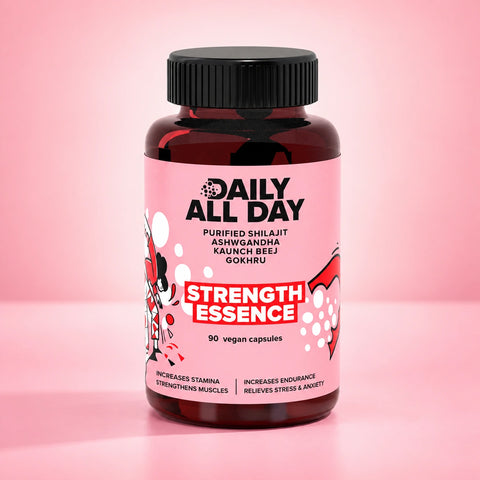
Quick answer: Ashwagandha (Withania somnifera) supports stress and fatigue relief in India by helping regulate cortisol, the body's primary stress hormone, through its active withanolides. Taken consistently, it may help working adults feel calmer and less drained. Strength Essence- Energy and Stamina Booster combines ashwagandha with shilajit and kaunch beej for daily energy support.
Does Ashwagandha Really Relieve Stress and Fatigue? A Practical Guide for India
It is 11 PM on a Tuesday. You have been in back-to-back video calls since 9 AM, skipped lunch, and your dinner was cold rajma rice eaten at your desk. You are exhausted, but your mind will not switch off. Sound familiar? A 2023 survey by the Indian Psychiatry Society found that nearly 74% of urban Indian adults aged 25–45 report moderate-to-high perceived stress levels, with fatigue being the most common physical complaint. If you have been searching for ashwagandha for stress and fatigue in India, you are in the right place — and you deserve a straight, science-grounded answer, not just marketing copy.
What Exactly Is Ashwagandha?
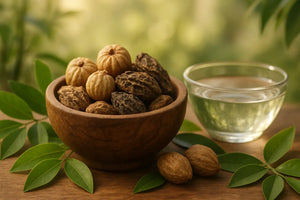
Ashwagandha (Withania somnifera) is a small, hardy shrub that grows across India's drier regions, from Rajasthan to Madhya Pradesh. Its roots have been used in Ayurvedic practice for over 3,000 years, classified as a Rasayana — a class of herbs traditionally associated with rejuvenation and vitality.
In Ayurveda, it is considered a Balya herb, meaning it traditionally supports strength and resilience. Today, botanists call it an adaptogen: a substance that may help the body maintain balance when under physical or psychological load. It is not a sedative. It does not knock you out. Think of it more like a steady hand on the wheel during a rough drive.
In the Indian market, you will find ashwagandha in several forms. Churna (root powder) is the oldest form, traditionally mixed with warm milk and ghee at night. Ashwagandharishta is a fermented liquid formulation. KSM-66 ashwagandha capsules in India represent a newer, standardised extract format where withanolide content is verified. There are also gummies and syrups. For consistency and convenience — especially if you are a working adult in Bengaluru or Pune without time to measure powder every evening , a standardised capsule or tablet is generally easier to stick with.
How Does It Work on Stress and Cortisol?
Here is what actually happens in your body. Chronic stress keeps your hypothalamic-pituitary-adrenal (HPA) axis in a low-grade alarm state. Your adrenal glands keep releasing cortisol. Over weeks and months, elevated cortisol disrupts sleep, drains energy, and affects focus. This is the biology behind that "tired but wired" feeling so common among Indian working adults.
Ashwagandha's withanolides appear to modulate HPA axis activity, which may reduce cortisol output over time. A 2019 randomised, double-blind, placebo-controlled study published in Medicine (a peer-reviewed journal) involving 60 adults found that participants taking 240 mg of ashwagandha root extract daily for 60 days showed significantly lower morning cortisol levels and self-reported stress scores compared to placebo.[1]
Closer to home, a 2012 study conducted at Asha Hospital, Hyderabad , involving 64 Indian adults with chronic stress , found that 300 mg twice daily of standardised ashwagandha root extract significantly reduced serum cortisol and scores on the Perceived Stress Scale after 60 days.[2] This is one of the most frequently cited Indian-population studies on ashwagandha cortisol relief for working adults.
A 2021 randomised controlled trial of 150 healthy adults published in the journal Evidence-Based Complementary and Alternative Medicine further showed improvements in fatigue, anxiety, and overall quality of life after 90 days of ashwagandha extract use.
None of this means ashwagandha replaces sleep, a reasonable workload, or a meal you actually sit down to eat. But the cortisol-modulating effect is real, documented, and specifically relevant to the kind of sustained, low-grade stress common in Indian metro life.
Withanolides Deep Dive: The Active Compounds
The bioactive compounds in ashwagandha are called withanolides. These are naturally occurring steroidal lactones concentrated primarily in the root. When you see a supplement labelled "standardised to 5% withanolides," it means the manufacturer has verified that every capsule contains a consistent, measurable dose of the active compound , not just ground root powder of variable quality.
This matters enormously in the Indian supplement market, where product quality varies widely. An unstandardised churna from a kirana counter and a KSM-66 ashwagandha capsule from a GMP-certified facility are not the same thing, even if both say "ashwagandha" on the label.
Withanolides also have mild anti-inflammatory properties. Some research links them to supporting GABA receptor activity in the brain, which may partly explain the calming effect users describe. This is distinct from sedation. You can stay alert while feeling less reactive to stressors.
If you want to explore how ashwagandha supports gym recovery alongside stress relief, see our post on Can Ashwagandha Lower Cortisol for Gym Recovery?.
Beyond Stress: Other Potential Benefits
Stress and fatigue are the headline act, but the research points to a few supporting benefits worth knowing:
- Sleep quality: The species name somnifera literally means "sleep-inducing" in Latin. Multiple studies suggest ashwagandha may help people fall asleep faster and report better sleep quality , particularly relevant during festival seasons like Diwali or Navratri when late nights, sweets, and disrupted routines are the norm.
- Physical stamina: A 2015 study of 57 adults found significant improvements in muscle strength and recovery with ashwagandha supplementation, which is why it features in formulations targeting both mental and physical fatigue.
- Cognitive function: Some studies indicate modest improvements in reaction time and task performance, useful for anyone managing complex work or exam preparation.
- Post-illness recovery: For those rebuilding after viral illness, the adaptogenic properties may support gradual energy restoration. Our post on Can Ayurvedic Supplements Help Post-COVID Brain Fog? covers this in more detail.
These are supportive benefits, not guaranteed outcomes. Results vary based on dosage, formulation quality, consistency, and individual physiology.
What Indian Users Are Saying on Quora
Real-world experience often fills in the gaps that clinical studies leave open. Here is what Indian users are discussing:
- On anxiety reduction: Users report that ashwagandha's adaptogenic action helps the body manage stress by moderating cortisol. Read the Quora discussion on how ashwagandha helps anxiety.
- Personal stress management experiences: One user notes taking it with warm milk at night before sleeping, aligning with the traditional Ayurvedic recommendation of milk as an anupan (carrier). Check the Quora thread on personal stress management experiences.
- Mechanism in the body: Users explain that it may improve symptoms of anxiety and stress-related concerns by supporting overall mental resilience over time. See the full Quora answer on how ashwagandha works in the body.
- Effect on mental stress: Multiple respondents confirm that consistent use over several weeks shows more noticeable results than short-term or irregular use. Explore the Quora thread on mental stress.
Safety: Who Should Be Careful?
Ashwagandha is well-tolerated by most healthy adults. Side effects at standard doses are usually mild: occasional loose stools, mild drowsiness, or stomach discomfort, especially on an empty stomach.
That said, some people should not take it without consulting a registered doctor or qualified Ayurvedic practitioner first:
- Pregnant women: Traditionally contraindicated across all trimesters. If you are pregnant or trying to conceive, please speak to your gynaecologist before taking any supplement containing ashwagandha.
- People on thyroid medication: Ashwagandha may influence thyroid hormone levels. If you are on levothyroxine or any thyroid medication, monitor levels with your doctor.
- People on diabetes or BP medication: Ashwagandha may have additive effects with blood sugar-lowering or antihypertensive drugs. Dosage adjustments may be needed , your physician should know you are taking it.
- Pre-surgery: Discontinue at least two weeks before any scheduled procedure, as it may affect anaesthesia or clotting.
- Autoimmune conditions: Conditions like lupus or rheumatoid arthritis involve an already-active immune response. Ashwagandha's immune-modulating effects may not be appropriate here without guidance.
Also worth clarifying: in India, ashwagandha supplements sold as dietary supplements fall under FSSAI regulation , not AYUSH licensing. An FSSAI-registered supplement is not the same as an AYUSH-licensed medicine. Both can be legitimate, but they are governed differently. When buying any ashwagandha supplement in India in 2025, look for FSSAI registration, GMP certification, and third-party lab testing on the label.
How to Use Strength Essence in Your Daily Routine
Strength Essence- Energy and Stamina Booster combines ashwagandha with shilajit, kaunch beej, and gokhru , a formulation designed for adults dealing with physical fatigue and mental drain together. It is 100% vegetarian, with plant-based capsules (cellulose, not gelatin), GMP-certified, and lab-tested for withanolide standardisation.
Timing with Indian meal patterns: Take 1 capsule twice daily after meals. After breakfast and after dinner work well for most people. If your breakfast is very light (just chai and a biscuit, which is common in Indian households), take it after your first proper meal of the day to avoid any stomach discomfort. Avoid taking it on a completely empty stomach. If you have a late-dinner lifestyle typical of metros, the evening dose after dinner is fine , ashwagandha's mild calming effect may actually support better sleep onset.
Interaction with common Indian foods: Ghee and warm milk are traditional carriers for ashwagandha in Ayurveda and do not interfere with absorption. Dahi (curd) is fine. Avoid taking it with very strong chai or coffee immediately after, as tannins may marginally affect absorption. Standard dal-rice-sabzi meals are perfectly compatible.
Your 30/60/90 Day Journey
30 days: Most users notice subtle shifts. Sleep may feel slightly deeper. That mid-afternoon crash , the one where even AC-office air feels suffocating , might ease a little. Do not expect dramatic changes yet. This is the foundation-building phase.
60 days: Cortisol modulation tends to show more clearly here. Morning energy levels, mood stability across the workday, and resistance to the kind of small frustrations that used to derail your afternoon are the markers to track. The Hyderabad study cited earlier saw significant cortisol reduction at this point.
90 days: Sustained energy, more consistent sleep, and a generally reduced sense of overwhelm are the reported outcomes at this stage. Physical stamina improvements , relevant if you exercise or have a physically active job , become more noticeable. This is also a good time to reassess with your doctor if you are managing any underlying conditions.
Try Strength Essence- Energy and Stamina Booster →
Frequently Asked Questions
Should I take ashwagandha before or after meals, and does it matter with typical Indian food timings?
Take it after meals, not on an empty stomach. For most Indian eating patterns , a light breakfast around 8–9 AM, lunch around 1–2 PM, and dinner at 9–10 PM , taking your capsule after breakfast and after dinner works well. If your breakfast is just chai, pair it with your lunch instead. Ashwagandha is fat-soluble to a degree, so a meal with a little ghee, dahi, or any cooked sabzi improves absorption. Warm milk as a chaser in the evening is the traditional Ayurvedic method and remains a reasonable option.
I am on thyroid or blood pressure medication. Is ashwagandha safe for me?
This is one of the most common questions Indian users have, and it is the right one to ask. Ashwagandha may influence thyroid hormone levels (both T3 and T4), which means if you are already on levothyroxine or any thyroid medication, your levels could shift. Similarly, it may have mild blood pressure-lowering effects that could add to the action of antihypertensive drugs like amlodipine or telmisartan. Neither of these is a reason to avoid it automatically, but both are reasons to tell your doctor before starting. Do not self-adjust your medication doses based on how you feel.
Does ashwagandha work differently in summer versus monsoon in India? Should I change my dose seasonally?
Ayurvedic seasonality (ritucharya) suggests that ashwagandha, being a warming herb (ushna virya), is particularly well-suited to winter and early spring. During peak Indian summer (April to June) or high-humidity monsoon months, some practitioners recommend slightly lower doses or taking it with cooling carriers like coconut water or room-temperature milk rather than hot milk. This is traditional guidance, not a pharmacological mandate. If you notice increased heat sensations or skin warmth during summer months, scale back to one capsule daily and discuss with a qualified Ayurvedic practitioner.
What is the difference between an FSSAI supplement and an AYUSH-licensed ashwagandha product in India?
This confuses a lot of buyers. An FSSAI-registered ashwagandha product is a dietary supplement regulated as a food product under the Food Safety and Standards Authority of India. It cannot make medicinal or disease-treatment claims. An AYUSH-licensed product (with a valid AYUSH licence number) is classified as an Ayurvedic medicine, regulated by the Ministry of AYUSH, and can make certain traditional therapeutic claims if licensed. Both can be legitimate and safe, but they sit in different regulatory categories. When buying any supplement, look for either a valid FSSAI registration number or an AYUSH licence, GMP certification, and batch-level lab testing. Avoid products with neither.
I already take triphala and brahmi every day. Can I add ashwagandha without any issue?
Triphala (a digestive and gentle detox formulation) and brahmi (traditionally used for cognitive support) are among the most common Ayurvedic herbs Indian adults already use. Ashwagandha generally pairs well with both. There are no known adverse interactions between these three herbs. In fact, brahmi and ashwagandha are often combined in traditional Ayurvedic formulations for stress and cognitive support. The practical caution is to not start multiple new supplements simultaneously , if you add ashwagandha, give it 2–3 weeks before adding anything else, so you can clearly assess what is doing what for your body.
Who absolutely should not take ashwagandha, and what are the warning signs to watch for?
Pregnant women should avoid it entirely , please consult your gynaecologist. Breastfeeding women should also check with their doctor first. People with active autoimmune conditions (lupus, rheumatoid arthritis, multiple sclerosis) should use caution because ashwagandha may stimulate immune activity. Anyone scheduled for surgery should stop at least two weeks before, as it may affect anaesthesia response. Warning signs to watch for after starting: significant drowsiness that affects your functioning, loose stools lasting more than 2–3 days, or any unusual skin reaction. These are uncommon but worth noting. If any of these occur, stop and consult a registered medical professional.