Shatavari for Women’s Health & Hormones: Ayurvedic Claims vs Research
Table of Contents
- Why is Shatavari Famous for Women's Health?
- Ayurveda’s Claims: Shatavari as the Queen of Herbs
- Scientific Research: What Does Science Actually Say?
- Ingredients Deep Dive: What’s Inside Shatavari?
- Quora QnA: Real People, Real Questions About Shatavari
- Helpful Products: Daily All Day Essentials for Gut & Hormonal Health
- Frequently Asked Questions
Why is Shatavari Famous for Women's Health?
Shatavari, also called asparagus racemosus, is known in Ayurveda for balancing women’s hormones, helping with periods, and making menopause easier. This climbing plant with needle-like leaves and delicate white flowers grows across India. Because it supports overall reproductive health and hormonal well-being, Shatavari, known as शतावरी, has been called the queen of Ayurvedic herbs for women.
Whether you have heard about Kapiva shatavari balance juice, vidarikand, शतावरी पाउडर के फायदे, or just want natural support for your monthly cycle, it all comes back to this unique racemosus asparagus plant.
Ayurveda’s Claims: Shatavari as the Queen of Herbs
- Rejuvenating: Shatavari is a key "rasayana", or rejuvenator, believed to nourish both body and mind.
- Hormone Balancer: Used for managing menstrual cycles, reducing PMS, and making menopause smoother for centuries [4].
-
Fertility Support: Said to improve chances of conception and healthy pregnancy.
Learn how ashwagandha can also help women’s hormone balance. - Menopause Comfort: Shatavari can be used for hot flashes, mood swings, and sleep disturbances in midlife.
- General Nourishment: It’s seen as a tonic herb for all stages of a woman’s life—puberty, fertility, pregnancy, and menopause.
Its balancing goodness is why it is a top herb in Ayurvedic texts and home herbal guides.
Scientific Research: What Does Science Actually Say?
- Perimenopause & Menopause: Several randomized trials have shown Shatavari extract can significantly reduce hot flashes, mood shifts, and sleep issues in perimenopausal women. Major hormonal markers like FSH, LH, estradiol, and AMH get more balanced [2][3].
- Fertility & Reproductive Health: Shatavari boosts antioxidants and fights oxidative stress, which can improve conditions like PCOS and infertility [4][5].
- Postmenopausal Health: Research also shows muscle strength may improve with Shatavari use, even if bone turnover remains unchanged [2].
- Safety: No major side effects have been reported, and Shatavari is generally considered safe for most women [1]—still, talk to your doctor before starting, especially if pregnant or breastfeeding.
- Animal Studies: Integrated extracts of asparagus racemosus with other herbs like Trigonella foenum-graecum may regulate hormones and relieve menopause-like symptoms in rats [6].
Ingredients Deep Dive: What’s Inside Shatavari?
- Saponins (Shatavarins): These plant compounds mimic estrogen, which may help with hormonal balance and menopause symptoms.
- Flavonoids: Powerful antioxidants help reduce stress, inflammation, and cell damage.
- Polysaccharides: Support the immune system and provide nourishment for reproductive tissues.
- Vitamins & Minerals: Contains traces of B vitamins, vitamin C, zinc, calcium, and magnesium, all working to keep you healthy.
- Traditional Formulations: Often combined with ashwagandha, safed musli powder, kaunch beej, or moringa powder for broad support.
Shatavari jadi buti, organic shatavari powder, and supplements like pili shatavari are all ways people consume these beneficial ingredients.
Quora QnA: Real People, Real Questions About Shatavari
How does Satavari help women's health throughout life? (Quora)
- Can work as an estrogen modulator, soothing hormone shifts.
- Key for fertility, period comfort, and managing menopause.
- Promotes regular menstrual cycles and improved reproductive wellness.
Is Shatavari good for females? (Quora)
- Yes, it nourishes the reproductive organs.
- Improves fertility and maternal health.
What is Shatavari, and is it good for your health? (Quora)
- The plant is a traditional remedy for anxiety, depression, and infertility.
- Women use it to regulate periods and support hormone balance.
Is using ashwagandha or shatavari good for health? (Quora)
- Ayurvedic herbs like ashwagandha and shatavari are trusted for hormonal and general wellness.
What is the dose for hormonal balance? (Quora)
- Usually, 250–500 mg standardized extract is recommended (but check with your doctor).
- Consistency is key for results in 6–8 weeks.
Helpful Products: Daily All Day Essentials for Gut & Hormonal Health
Daily All Day offers products that naturally support gut and hormonal balance, working hand in hand with Shatavari for full-body wellness.
-
Daily All Day Triphala 1:2:3 (120 Tablets)
- Key Ingredients: Amla (250mg) - for immunity and skin, Bibhitaki (167mg) - for detox, Haritaki (83mg) - for better digestion.
-
Benefits:
- Reduces bloating, supports colon cleanse, detoxifies the body, relieves constipation, improves bowel health, and enhances skin & hair.
- Specially formulated as per Ayurveda, 100% vegetarian, lab-tested.
- Best used for 6–8 weeks for positive results. Know more about Triphala benefits here.
-
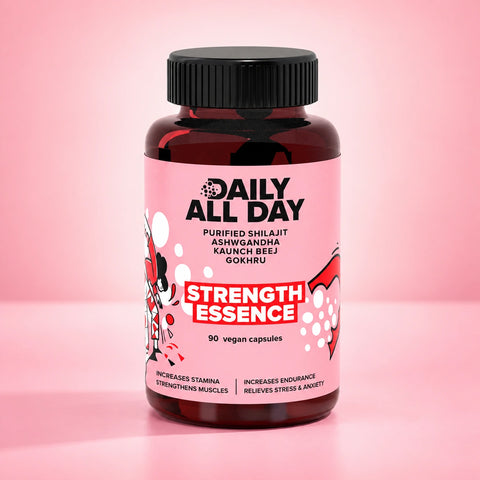
Daily All Day Strength Essence (90 Capsules)
- Key Ingredients: Ashwagandha, Shilajit, Gokhru, Kaunch Beej.
-
Benefits:
- Builds muscle, reduces stress, fights fatigue, boosts stamina.
- 100% vegetarian, trusted Ayurvedic herbal blend.
- Good for people needing more energy and strength. Read more about Ashwagandha’s role here.
Want to know how racemosus asparagus pairs with modern gut health recommendations? Check out our Triphala Gut Health Guide.
Frequently Asked Questions
-
What is Ashwagandha?
Ashwagandha is an adaptogenic Ayurvedic herb. It helps the body adapt to stress and improves overall well-being. -
How does Ashwagandha help with stress?
It lowers cortisol levels and helps people feel relaxed and more focused over time. -
Is Ashwagandha safe for everyone?
It is generally safe. But pregnant women, breastfeeding mothers, or people with significant health conditions should avoid it without consulting a doctor. -
Can Shatavari be taken along with other Ayurvedic remedies?
Yes, Shatavari is often mixed with ashwagandha, safed musli, or moringa for better hormonal and reproductive support. -
Are there any risks with Shatavari?
For most women, Shatavari is safe. However, always check with your doctor, especially if you are on medication, pregnant, or breastfeeding, or if you have an allergy to asparagus family plants.

Shatavari (Asparagus racemosus) is a time-honored remedy in Ayurveda, especially valued for women’s health across different stages of life. Scientific evidence is increasingly backing its traditional uses: studies show Shatavari can ease perimenopausal and menopausal symptoms like hot flashes, sleep issues, and mood swings [1][2][3], support fertility and hormone balance [4][5], and improve antioxidant status. While more research can further clarify its benefits, Shatavari appears to be a safe, natural option for supporting women’s reproductive and hormonal wellness. Brands like Daily All Day carefully use quality sourcing and formulation—for instance, their Triphala and Strength Essence blends combine traditional wisdom with modern safety so women can confidently use these products. It’s always best to consult your doctor before starting any new herb or supplement, especially if you are pregnant or breastfeeding. Shatavari stands out not just for its health benefits but also its place in women’s wellness traditions from ancient times to today. [4][1][2][3][5][6]