Harad
Share
Table of Contents
- What is Harad?
- Ingredients Deep Dive
- Harad: Uses, Benefits, and Research
- Popular Quora Q&A
- Daily All Day Products with Harad
- Frequently Asked Questions
Harad: The Ayurvedic Power Fruit
Imagine a single fruit so powerful it's called the "King of Medicines." Harad, also known as Haritaki, is exactly that! Found in many traditional remedies, Harad is popular for improving digestion, boosting immunity, and even giving your hair and skin a glow. From old Ayurvedic texts to modern scientific research, Harad (or Harad powder/harad ka powder) is loved for its natural healing abilities.
What is Harad?
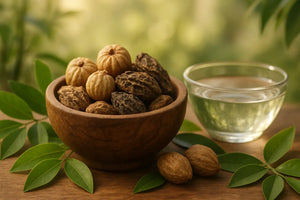
Harad comes from the plant Terminalia chebula. The green fruits are picked, sun-dried until they turn golden brown or black, and then ground into powder or made into supplements. In some places, it is called Harad in Kannada (often referred in South India), chhoti harad (small harad), harad meaning in Telugu (చెబులీ | Chebuli), and even harad ka churan, when turned into a digestive powder.
Ingredients Deep Dive: The Magic Inside Harad
- Chebulinic acid: This powerful compound helps fight viruses and protects against cell damage. It's even effective in stopping the growth of certain viral proteins.[1]
- Gallic acid: A natural antioxidant, gallic acid helps keep your cells safe from harm and supports body detoxification.[2]
- Chebulagic acid: Known for its strong anti-inflammatory effects, chebulagic acid helps your body fight off infections and reduces swelling.[4]
- Corilagin and Ellagic acid: These make Harad astringent (that puckering taste!) and help guard your stomach and colon.
- Tannins and Polyphenols: Natural chemicals that give Harad its signature taste and superb antibacterial properties.[3]
Why Are These Compounds Important?
- They act as antioxidants (protect your body from harmful molecules).
- They have anti-inflammatory and healing effects, making you feel better faster.
- They boost digestion and help regulate blood sugar.[2]
Harad: Uses, Benefits, and Scientific Backing
- Digestive Health: Harad is a mild, natural laxative. It relieves constipation, helps clean your gut, and improves digestion. For people with gas or feeling bloated, Harad offers quick comfort.[2]
- Detox Support: Harad clears out toxins by acting gently on your colon, making you feel lighter and healthier.
- Immunity Boost: The antioxidants inside Harad keep your immune system strong and ready to fight infections.[5]
- Skin and Hair Health: Applied topically or taken as a supplement, Harad makes skin cleaner, fights breakouts, and even supports hair strength and shine. Its astringency also helps balance oily skin.[2]
- Blood Sugar Regulation: Early research suggests Harad may help keep blood sugar in check by improving how your body handles sugar.
- Anti-viral Power: New studies show that chebulinic acid found in Harad can stop viruses (like PEDV, even influenza in studies) from attaching and entering cells.[1] [5]
- Protection from Radiation Damage: Chebulinic acid in Harad may even lessen the harm caused by radiation, helping your body repair itself.[6]
More Science!
Researchers have now identified over 30 bioactive compounds in Harad. Most studies support Harad as safe, but some people (rarely) may develop stomach upset or mild diarrhea if the dose is too high.[4]
Popular Quora Q&A about Harad
-
What is known about the Harad, Haradrim, and the Oliphants?
Harad is a term from Lord of the Rings, referring to hot, desert-like countries, similar to medieval Arabia.
Read on Quora -
Where is Harad in Lord of the Rings?
Harad (also called The Harad) is found in the south of Middle-Earth, inspired by the term Tolkien created.
Read on Quora -
What are the uses of herb haritaki?
Harad eases bowel movement and is a common digestive aid. It is also called Ramban in North India.
Read on Quora -
What are the side effects of Haritaki?
Some people may have mild stomach upset, especially if used in high doses. Usually safe in traditional amounts.
Read on Quora -
Can I take Harde churna everyday? Does it have any side effects?
Regular use supports a healthy digestive tract; mild side effects are rare.
Read on Quora
Daily All Day Products Featuring Harad
Triphala 1:2:3 (120 Tablets) — Our Best Seller
Triphala 1:2:3 is a traditional Ayurvedic formula that blends Harad with Amla and Baheda for gentle yet powerful gut support. Here’s how it stands out:
- Reduces Bloating & Promotes Gut Health
- Relieves Constipation & Cleanses Colon
- Supports Healthy Weight & Metabolism
- Home Remedy Trusted for Centuries
- Certified Quality: 100% vegetarian, non-toxic, lab tested
For best results, use consistently for 6-8 weeks. Not recommended for pregnant or lactating women.
Interested in More?
- Harad benefits the gut, but so do Triphala and Triphala for acidity and gas.
- To learn about other digestion-aiding ingredients, the power of Ginger or Baheda, visit our blog.
Frequently Asked Questions
-
What is Harad?
Harad is the fruit of the Terminalia chebula tree. It is revered in Ayurveda for its amazing digestive, immune, and detox benefits. -
How does Harad help with constipation?
Harad acts as a gentle, natural laxative. It stimulates bowel movement, relieves constipation, and helps improve overall gut function. It's key in Triphala, a popular home remedy for digestive problems. -
What are the main ingredients in traditional Triphala?
Triphala is a mix of Harad (Haritaki), Amla, and Baheda in a 1:2:3 ratio. Harad is recognized for clearing the colon and supporting regularity. -
Can I take Harad/Harad powder daily?
Yes, for most people, regular use of Harad is safe, especially in traditional doses and formulations like Triphala. Always start with small amounts and talk to your doctor if you are on medication or have health issues. -
Are there any side effects of Harad?
Side effects are rare but may include mild stomach discomfort or diarrhea if taken in excess. If you notice any discomfort, reduce the dose or stop use, and see a healthcare provider.
Note: This article answers top Google trends queries like isabgol bhusi, harad in kannada meaning, harad meaning in telugu, harad ka churan, harad powder, harad ka powder, chhoti harad, chhoti, and references digestive and home remedies.
Harad, or Terminalia chebula, truly earns its name as the "King of Medicines." Used for centuries in Ayurvedic medicine, Harad stands out for supporting digestion, detoxification, immunity, skin, hair health, and even blood sugar control. Modern scientific studies have confirmed that Harad contains powerful bioactive compounds—including chebulinic acid, chebulagic acid, gallic acid, and more—that provide anti-inflammatory, antioxidant, and even antiviral properties [2] [4]. Its astringency, a result of unique chemical interactions, has also been recently explained by science [3].
Daily All Day uses Harad in our Triphala 1:2:3 Tablets as a key part of a time-tested blend that keeps your gut healthy, aids digestion, and gives your skin and hair a natural boost. Harad's natural detox and anti-constipation effect makes it perfect for people prone to gas, bloating, and irregular bowel movements. Plus, research shows it can protect cells, regulate the immune system, and help shield against viral attacks [5] [6]. Always check with a doctor before adding any supplement, especially if you have existing medical conditions.
Main Points:
- Supports healthy digestion, regularity, and detox.
- Rich in beneficial polyphenols and antioxidants.
- Has proven anti-inflammatory and immunity-boosting effects.
- Found in trusted traditional and modern products, such as Daily All Day Triphala 1:2:3.
- Safe for most but always use with guidance.