Does Biryani Oil Destroy Your Omega Balance?
Share
TL;DR: Most Indian diets, especially those heavy in sunflower and groundnut oils from biryani and fried snacks, carry far more omega-6 than omega-3. Algae-derived ALA, DHA, and EPA in Daily All Day's Total Wellness Vegan Omega 3 6 9 help restore this ratio, supporting heart, brain, and joint comfort without fish oil.
Does Biryani Oil Destroy Your Omega Balance?
The Story of Hyderabad Biryani and Spicy Oils
It's a Sunday afternoon in Hyderabad. The degchi lid lifts, steam rises, and that unmistakable golden-red oil pools at the top of the rice. You know the smell. You know the pull. Nobody walks away from a good dum biryani.
But here's what most biryani lovers in India don't think about: that shiny, fragrant oil sitting on top is also one of the biggest reasons the average Indian diet runs a serious omega-6 surplus. And the gap between omega-3 and omega-6 in Indian eating patterns is wider than almost anywhere else in the world.
This isn't about guilt-tripping you over your Sunday meal. It's about understanding what omega 3 for indian diet high omega 6 foods actually means for your body, and what you can do about it without giving up biryani.
A 2017 study published in the Journal of Nutrition and Metabolism, examining north Indian adults, found that higher omega-6 to omega-3 ratios in the diet were significantly associated with a higher prevalence of metabolic syndrome markers.[4] That's a real number from a real Indian population. It's not a Western statistic loosely applied to us.
Understanding Omega Fatty Acids: Omega-3 vs Omega-6 (and Why Indian Diets Get This Wrong)
Both omega-3 and omega-6 are essential fatty acids. Your body cannot make them. You have to eat them. But they do very different things once inside you.
Omega-6 fatty acids (especially linoleic acid, found abundantly in sunflower, safflower, soybean, and groundnut oils) tend to produce compounds that promote inflammatory signalling when consumed in excess. They are not bad by themselves. The problem is the ratio.[2]
Omega-3 fatty acids (ALA from flaxseeds and walnuts, and the longer-chain DHA and EPA from algae or fish) produce compounds that support anti-inflammatory pathways, help maintain normal blood triglycerides, and are associated with better cognitive function over time.[1]
The ideal dietary ratio is roughly 4:1 (omega-6 to omega-3). Most urban Indian diets sit somewhere between 15:1 and 50:1. That's not a small gap. That's a structural imbalance built into the cooking oils we use every single day.
Here's what none of the top search results on omega 3 for indian diet high omega 6 foods tell you: the problem is not just biryani. It is the base oil in your everyday dal tadka, your poha, your sabzi. Biryani is just the most visible, most concentrated version of a pattern that runs through most Indian cooking.
Ayurveda, interestingly, recognized the concept of "snigdha" (unctuous, oily) foods affecting the body's internal balance. Traditional Ayurvedic practice through ritucharya (seasonal eating) suggested lighter fats in summer (like cow ghee in small quantities) and warming fats in winter. Ghee, notably, has a more balanced fatty acid profile than refined sunflower oil, which is why the switch from ghee to cheap refined vegetable oil in commercial cooking has nutritional consequences that go beyond simple calorie counting.
Hyderabadi Biryani and the Spicy Oil Secret
So what exactly is in that oil layer?
Most Hyderabadi biryani joints, from roadside stalls to established names, use sunflower oil or groundnut oil for deep-frying the onions (the birista that gives biryani its signature caramelized sweetness). They use large volumes. A kilo of biryani at a restaurant can contain anywhere from 80 to 150 ml of oil, depending on the cook.(Quora: Why is Hyderabadi chicken biryani very greasy?)
The secret ingredient that makes restaurant biryani taste different from home biryani? Mostly, it's the quantity of that oil and the depth of frying.(Quora: What is the secret ingredient in Hyderabadi Biryani?)
Sunflower oil is approximately 65% linoleic acid (omega-6). Groundnut oil sits around 32% omega-6. Neither contains meaningful omega-3. When you eat a full plate of dum biryani made in these oils, you are adding a substantial omega-6 load to a diet that is already short on omega-3.
This is the gap that omega 3 for indian diet high omega 6 foods content rarely addresses directly: it's not one meal. It's the cumulative effect of cooking oil choices repeated three times a day, 365 days a year, in a country where omega-3 rich fish is either not eaten (vegetarians), expensive, or limited to coastal cities.
How Spicy Oils Affect Your Omega Balance
When omega-6 dominates, the body's inflammatory signalling pathways stay activated longer than they should. This is not dramatic or sudden. It's slow. You might notice it as persistent joint stiffness, sluggish recovery after exercise, or that foggy, heavy feeling after a rich meal.[3]
A 2021 review of Indian dietary patterns (published in the Indian Journal of Medical Research, covering studies across multiple Indian population cohorts) noted that low omega-3 intake combined with high omega-6 cooking oil consumption is a consistent pattern in both urban and rural Indian adults, with vegetarians showing the lowest DHA and EPA levels of any dietary subgroup.[6]
For Indian vegetarians especially, this is significant. Flaxseeds and walnuts provide ALA, which the body can partially convert to DHA and EPA. But that conversion rate is low (typically 5 to 10% for EPA and under 1% for DHA in most adults). Eating flaxseeds helps. It does not fully close the gap.
People on thyroid medication or blood pressure medication should be aware that high omega-6 intake can interact with inflammatory markers that these medications are also trying to address. This doesn't mean avoiding oil entirely, but it does make the omega balance more relevant for these groups. Always check with your doctor if you have a diagnosed condition before making major dietary changes.
Pregnancy is another context worth naming clearly. DHA is critical for fetal brain development, and many Indian pregnant women are deficient in it. If you are pregnant or nursing, please consult a registered gynecologist or qualified Ayurvedic practitioner before starting any omega supplement.
If you are also managing screen-related dry eyes and skin hydration alongside your omega imbalance, this piece on Sea Buckthorn Juice and Omega 3-6-9 as inside-out support for Indian adults glued to devices covers the connection in detail.
Easy Ways to Balance Your Omega Fats in an Indian Diet
You do not need to overhaul your kitchen. Small, consistent changes work better than dramatic ones you abandon after two weeks.
For omega 3 from food sources in an Indian diet:
- Add one tablespoon of ground flaxseeds to your morning dahi or chutney. Whole flaxseeds pass through largely undigested. Grind them.
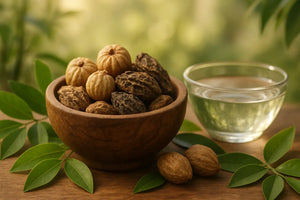
- Use four to five walnuts as your 4 PM snack instead of biscuits. This works especially well if you are working from home or in an AC office where the chai-and-biscuit cycle is relentless.
- Add chia seeds to your nimbu paani or raita. Virtually no flavour change. Meaningful omega-3 addition.
- Switch at least one cooking oil to cold-pressed mustard oil for home cooking. Mustard oil has a more favourable omega-6 to omega-3 ratio (about 2:1) compared to sunflower oil.[5]
- If you eat fish, bangda (mackerel) and rohu are affordable, widely available, and genuinely high in EPA and DHA. Two servings a week makes a real difference.
For non-fish eaters, algae-based supplements are the direct route. Algae is where fish get their DHA and EPA from in the first place. A vegan algae-oil supplement bypasses the fish entirely and delivers the long-chain omega-3s your body actually uses.
For Indian managers and professionals dealing with work stress alongside poor dietary omega balance, there is useful context in this piece on Stress Free and Omega 3-6-9 as gentle nervous-system support for Indian managers.
Daily All Day Total Wellness Vegan Omega 3 6 9: What It Is and How to Take It with Indian Meals
Daily All Day's Total Wellness Vegan Omega 3 6 9 is an algae-based supplement providing ALA, DHA, and EPA in a single softgel, with no fish, no fishy aftertaste, and no animal-derived ingredients. It is FSSAI-registered as a dietary supplement (not an AYUSH-licensed medicine). This distinction matters for Indian buyers: FSSAI dietary supplements are regulated for safety and labelling; they do not make drug-equivalent therapeutic claims, and you should be cautious of any omega supplement that does.
When to take it with Indian meals: Take it with your largest meal of the day. For most Indian households, that is lunch (dal-chawal, sabzi-roti) or dinner. Omega-3 fatty acids are fat-soluble. Taking them alongside a meal that contains some fat (even a small amount of ghee or oil in your food) significantly improves absorption compared to taking them on an empty stomach.
If your dinner is very late (common in metros, post 9 PM), take it at lunch instead. Late-night fat digestion is slower, and you will absorb the omega-3s more efficiently earlier in the day.
Seasonal note: In Indian summers (April to June), when digestion is naturally lighter (Ayurveda's Pitta-dominant season), pairing the supplement with a lighter meal like moong dal khichdi or curd rice works well. In winter, when richer meals like sarson da saag with makki di roti are common, the higher fat content in those meals actually helps absorption.
30 / 60 / 90 Day Timeline: What to Realistically Expect
30 days: Most people notice reduced post-meal heaviness and slightly better energy in the mornings. The omega ratio in your blood begins to shift, though you will not feel this directly. If you had dry or irritated eyes from screen exposure, some users report early improvement here.
60 days: Joint comfort tends to improve noticeably in people who had mild stiffness. Skin texture changes become more visible around this point, particularly for people in dry AC environments for long hours. Cognitive sharpness is harder to measure subjectively, but mood stability often improves as DHA levels in the brain begin to normalize.[1]
90 days: This is where sustained dietary omega balance shows measurable shifts in blood triglyceride support (when combined with dietary changes). People who pair the supplement with the food swaps mentioned above, reducing sunflower oil and adding flaxseeds, typically see the most significant composite benefit by the 90-day mark.[3]
Quora Q&A: Common Questions about Biryani's Spiciness
- Is biryani very spicy? , Most agree Hyderabadi biryani is layered and aromatic rather than simply hot. The blend is for depth of flavour, not just heat.
- Is Hyderabadi Biryani spicy? , It can be, because of the whole spice and chilli combination. People new to it might find the heat significant.
- What's the secret ingredient? , Deep-fried onions (birista) cooked in large quantities of oil are a key differentiator in restaurant-style biryani.
- Why does Hyderabadi Chicken Biryani taste greasy? , Restaurants use high volumes of refined oil instead of ghee to replicate that rich, glossy texture at lower cost.
- What is the secret of Hyderabad biryani? , Slow dum cooking, caramelized onions, and the quality of the spice blend. The oil carries those flavours into every grain.
Frequently Asked Questions
I take thyroid or blood pressure medication daily. Can I still take a vegan omega-3 supplement?
Omega-3 supplements are generally considered safe alongside most common medications, but there is a reason to check with your doctor first if you are on blood thinners or specific cardiac medications, since high-dose omega-3 can have a mild blood-thinning effect. For standard thyroid medication (levothyroxine), timing matters: take your thyroid tablet on an empty stomach as prescribed, and take your omega supplement with a meal at a different time of day. Always confirm with your registered medical practitioner before combining supplements with prescription medication.
Should I take omega-3 with my morning chai and breakfast, or with dinner?
With food that contains some fat. For most Indian households that means lunch or dinner, not an early morning cup of chai with a plain biscuit. If your dinner is after 9 PM (common in Delhi, Mumbai, and Bangalore metros), take it at lunch for better absorption. The fat in your dal tadka, sabzi, or a small amount of ghee is enough to help the omega-3 softgel absorb properly.
Is this supplement FSSAI-approved or AYUSH-approved? What's the difference?
Daily All Day Total Wellness Vegan Omega 3 6 9 is registered under FSSAI as a dietary supplement, which covers nutraceuticals and food supplements in India. AYUSH approval applies to products licensed as Ayurvedic medicines under the Drugs and Cosmetics Act. These are two different regulatory categories. FSSAI supplements are regulated for safety, manufacturing standards, and labelling accuracy. They are not licensed medicines and do not make drug-equivalent claims. If you see an omega supplement claiming AYUSH-approved medicinal benefits, treat that with caution as those are separate licensing categories with different legal requirements.
I'm vegetarian and already eat flaxseeds and walnuts. Do I still need a supplement?
Flaxseeds and walnuts provide ALA (alpha-linolenic acid), which is the plant form of omega-3. Your body converts some ALA to DHA and EPA (the forms your brain and heart use most), but the conversion rate is low, typically 5 to 10% for EPA and under 1% for DHA in most adults. If you are eating flaxseeds regularly, you are doing better than most Indian vegetarians. Whether you need a supplement depends on your overall diet, cooking oil habits, and how much omega-6 you consume daily. An algae-based DHA/EPA supplement directly provides the long-chain forms, bypassing the conversion step entirely. For vegetarians with very high omega-6 oil intake, that direct source is genuinely useful.[4]
Does the need for omega-3 change with Indian seasons? Should I take more in winter?
There is no standard clinical protocol that adjusts omega-3 dosage by Indian season. However, Ayurvedic seasonal eating (ritucharya) does suggest that winter (Hemanta and Shishira ritu) is when the body's digestive capacity is stronger and fat metabolism is more efficient. Practically, if you eat richer, oilier food during winter festivals and family gatherings (which most Indian households do, from Diwali through Makar Sankranti to Lohri), your omega-6 intake naturally spikes. Maintaining your omega-3 supplement consistently through those months, rather than only in summer, makes more sense for most Indian lifestyles.
Who should NOT take an omega-3 supplement without medical guidance?
Pregnant or nursing women should consult a registered gynecologist or qualified Ayurvedic practitioner before starting, even though DHA is critical during pregnancy. People scheduled for surgery should stop omega-3 supplements at least two weeks before the procedure due to mild blood-thinning effects. People on anticoagulant medication (warfarin, aspirin at high doses) should check with their doctor. If you have a diagnosed liver condition, discuss with your doctor before adding any fat-based supplement to your routine.[6]