Can Berberine Help Belly Fat and Blood Pressure in India?
Share
Bottom line: Berberine, derived from Daruhaldi (Berberis aristata), may support belly fat reduction and healthy blood pressure by activating AMPK, an enzyme that improves insulin sensitivity and fat metabolism. Gluco Wise Blood Sugar Support by Daily All Day combines berberine with Ceylon cinnamon and milk thistle, offering a science-backed, FSSAI-compliant berberine supplement for belly fat and blood pressure in India.
Can Berberine Help Belly Fat and Blood Pressure in India?
Table of Contents
- Why 'Normal Labs' Is Not the Full Picture
- The Hidden Link: Visceral Fat and BP in Indian Adults
- What Your Labs Are Not Measuring
- How Berberine Works: The Science
- Gluco Wise and How to Take It with Indian Meals
- 30, 60, and 90 Day Expectations
- What Indians Are Asking About Belly Fat and BP
- Frequently Asked Questions
Why 'Normal Labs' Is Not the Full Picture
Your last blood report came back fine. HbA1c normal. Cholesterol borderline. BP hovering around 128/84, which your doctor called "watch and wait." Yet your waistband is tighter than it was two Diwalis ago, and that afternoon fatigue after your dal-chawal lunch is now a daily ritual.
This is the quiet metabolic drift that millions of urban Indians are living with right now. It shows up in Bengaluru IT offices, in Mumbai households running on late dinners past 10 PM, in the AC-chilled Noida apartments where 8,000 steps feels like an ambitious goal. Normal labs. Real risk. And a supplement industry that mostly repeats the same global talking points without addressing how any of this maps onto an Indian plate, an Indian body, or an Indian lifestyle.
This post is written specifically for that gap. If you are researching a berberine supplement for belly fat and blood pressure in India, here is what the top-ranking pages are not telling you.
The Hidden Link: Visceral Fat and BP in Indian Adults
Visceral fat is the fat packed around your liver, pancreas, and intestines. You cannot see it in the mirror. Standard BMI misses it entirely. But it is metabolically active tissue that releases inflammatory compounds and disrupts insulin signalling — and Indian adults are disproportionately affected.
A large multi-centre study published in 2024 involving Indian adults found that abdominal obesity was significantly associated with elevated systolic blood pressure even in individuals whose overall BMI fell within the normal range.[1] A separate analysis confirmed that individuals carrying excess visceral fat showed BP readings 3–5 mmHg higher on average, enough to shift someone from pre-hypertensive to hypertensive classification.[2]
Indian genetics compound this further. South Asian bodies tend to store a higher proportion of fat viscerally at lower body weights compared to Western populations, a pattern documented consistently in ICMR-linked research. This is why a 68-kg Indian woman with a waist above 80 cm may carry more metabolic risk than a 75-kg counterpart elsewhere.
The two problems feed each other. Visceral fat raises insulin resistance, which raises BP, which promotes more fat storage around the organs. Breaking this cycle is exactly where a targeted berberine supplement for belly fat and blood pressure in India becomes relevant.
Curious why abdominal fat specifically drives blood pressure risk? This Quora thread has a clear breakdown from Indian readers and practitioners.
What Your Labs Are Not Measuring
Standard blood panels do not measure visceral fat. They do not measure HOMA-IR (insulin resistance index). They do not capture early endothelial dysfunction, which is when blood vessels start losing flexibility before BP numbers formally cross a threshold.
High blood pressure can develop silently for years before standard markers flag anything.[3] Insulin resistance follows the same pattern. Many people walk around with both problems brewing while their printed report says "within normal limits."
This is not a reason to panic. It is a reason to act early, which is exactly the Ayurvedic concept of rasayana — supporting the body's systems before imbalance deepens rather than waiting for symptoms to become undeniable.
If this sounds familiar, this Quora question captures the experience precisely, and the answers are worth reading.
Also worth exploring: Can Berberine Help Thin Indians With Hidden Blood Sugar Risk? covers the "thin but metabolically unfit" pattern in detail.
How Berberine Works: The Science
Berberine is an alkaloid found in Daruhaldi (Berberis aristata), a plant used in traditional Ayurvedic practice for centuries, described in classical texts as supporting medovaha srotas (the fat tissue channels) and liver function. Modern research has given this traditional use a molecular explanation.
Berberine activates an enzyme called AMP-activated protein kinase (AMPK), sometimes called the body's "metabolic master switch." AMPK activation does several things at once: it improves glucose uptake into cells, reduces the liver's glucose output, and signals fat cells to release stored triglycerides for energy. The result, over weeks, is improved insulin sensitivity and a gradual reduction in visceral fat accumulation.[4]
A meta-analysis of 12 randomised controlled trials found berberine supplementation was associated with meaningful reductions in waist circumference and body weight compared to placebo, with effects most pronounced when combined with dietary changes. Importantly, several of these trials included Asian populations, making the data more relevant to Indian metabolic profiles than purely Western studies.[5]
On blood pressure specifically: berberine appears to support healthy vascular tone through improved insulin sensitivity and reduced inflammatory signalling from visceral fat. It is not a standalone BP treatment. But as part of a metabolic reset, it addresses one of the upstream drivers of rising BP in Indians.
This is why searching for a berberine supplement for belly fat and blood pressure in India increasingly leads to formulations combining berberine with complementary ingredients rather than berberine alone.
For women wondering about thyroid interactions, Can Berberine Support Thyroid and Blood Sugar in Women? covers what the research currently says.
Gluco Wise and How to Take It with Indian Meals
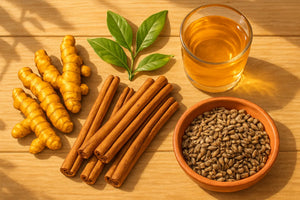
Gluco Wise Blood Sugar Support by Daily All Day contains Berberis aristata (Daruhaldi) extract alongside Ceylon cinnamon and milk thistle. Each ingredient is chosen with metabolic support in mind.
- Berberis aristata (Daruhaldi): May help support healthy blood sugar levels and insulin sensitivity. Traditionally used in Ayurveda for liver and metabolic balance.
- Ceylon cinnamon (Dalchini): A distinct variety from common cooking cinnamon, used to support insulin function and healthy post-meal glucose response.
- Milk thistle (Silymarin): Supports liver health and may help reduce fatty liver accumulation, which is very common in Indian adults with visceral fat concerns.
Now, the information that most berberine articles skip entirely: when and how to take it relative to Indian meal patterns.
Berberine has a relatively short half-life, so timing around meals matters. The general guidance from research is to take it 20–30 minutes before your two largest meals of the day. For most Indian households, that means before lunch (typically the heaviest meal) and before dinner. If you follow a late dinner pattern common in metro households — eating at 9:30 or 10 PM , taking your evening capsule before that meal is more relevant than taking it at a fixed "night time" hour.
One practical note for Indian diets specifically: berberine's effect on post-meal blood sugar is most relevant after high-carbohydrate meals. A rice-heavy lunch in a South Indian household, or a roti-dal-sabzi combination in a North Indian home, creates a meaningful glucose spike window. Taking Gluco Wise before these meals allows the berberine to be active when it is most useful.
During festival periods (Diwali mithai, Eid sewaiyan, Onam sadhya), when carbohydrate and sugar loads are significantly higher than usual, consistent pre-meal dosing becomes especially worth maintaining rather than skipping.
Consult a qualified healthcare practitioner for personalised dosage guidance, especially if you are on medication for blood pressure, thyroid, or blood sugar.
Try Gluco Wise Blood Sugar Support →30, 60, and 90 Day Expectations
Most supplement content gives you a vague "results vary" disclaimer. Here is a more honest timeline based on what the research and user patterns suggest, framed for an Indian adult making consistent lifestyle efforts alongside supplementation.
30 days: You are unlikely to see dramatic scale movement. What typically shifts first is post-meal energy. The sluggish, foggy feeling after a heavy lunch often lightens. Some people notice reduced cravings for sweet chai or biscuits in the late afternoon. Sleep quality can improve modestly. These are metabolic signals, not cosmetic ones. Stay consistent.
60 days: Waist measurements may begin to reflect a small but real reduction in visceral accumulation. Blood sugar variability (if you track it) tends to smooth out. If you have been combining Gluco Wise with 30 minutes of daily movement , even brisk walking during your society rounds or a lunchtime walk near your office , the effects compound noticeably at this stage.
90 days: This is the window where research trials show the most significant changes in metabolic markers. Waist circumference, fasting insulin, and in some cases BP readings show meaningful shifts in individuals who have maintained both supplementation and basic lifestyle consistency. If your doctor checks a lipid panel or HbA1c at this point, you may see the numbers moving in the right direction. This is also a good time to reassess with a qualified practitioner.
No supplement replaces food quality, movement, or stress management. But as a berberine blood sugar support supplement in India, Gluco Wise is designed to work alongside those changes, not instead of them.
Looking for natural approaches combining diet, movement, and supplementation? This Quora thread on natural ways to manage BP and belly fat in Indians has some grounded perspectives worth reading.
What Indians Are Asking About Belly Fat and BP
These are real questions from Indian readers on Quora, reflecting the gaps that generic articles do not address.
- How does abdominal fat increase blood pressure and risk of diabetes? Visceral fat releases inflammatory cytokines that stiffen blood vessel walls and impair insulin signalling simultaneously.
- Why do some people have normal labs but still struggle with weight and blood pressure? Because standard panels miss visceral fat, HOMA-IR, and early vascular changes that precede abnormal results.
- What are natural ways to control hypertension and lose belly fat in Indians? Diet quality, movement, stress management, and targeted supplementation with ingredients like berberine and milk thistle are the most studied approaches for Indian metabolic profiles.
- Are there effective Ayurvedic supplements for both blood pressure and abdominal fat? Formulations combining Berberis aristata, Ceylon cinnamon, and milk thistle align traditional Ayurvedic use with modern metabolic research. Gluco Wise brings these together in one FSSAI-compliant supplement.
Frequently Asked Questions
Should I take Gluco Wise before my dal-rice lunch or my roti-sabzi dinner , which meal matters more?
Take it before whichever meal has the higher carbohydrate load. For most Indian adults, that is lunch if you eat a full rice or roti-based meal midday. If your lunch is light (salad, fruit) and dinner is the heavy meal, prioritise the pre-dinner dose. Taking it 20–30 minutes before the meal allows berberine to be active during the glucose absorption window. If your schedule allows only one dose, pick your biggest carbohydrate meal of the day.
I am on amlodipine for BP and metformin for sugar. Can I still take a berberine supplement?
This is an important question that none of the top-ranking berberine articles address clearly. Berberine and metformin share overlapping mechanisms (both activate AMPK), so combining them may enhance blood-sugar-lowering effects beyond what either achieves alone. This is not inherently dangerous, but it requires monitoring. Similarly, berberine can have mild vasodilatory effects that could interact with antihypertensive medications. Please consult your doctor or a qualified Ayurvedic practitioner before combining Gluco Wise with prescription BP or diabetes medication. Do not self-adjust your prescription doses.
Is Gluco Wise an FSSAI product or an AYUSH-licensed medicine? What is the difference for me as a buyer?
Gluco Wise is a dietary supplement registered under FSSAI (Food Safety and Standards Authority of India), not a licensed AYUSH medicine. This is an important distinction. FSSAI-registered nutraceuticals are food-category products that may support general health and wellness. AYUSH-licensed medicines undergo a different regulatory pathway and make specific therapeutic claims for named conditions. As an FSSAI supplement, Gluco Wise supports metabolic health as part of a balanced lifestyle. It does not claim to treat, cure, or diagnose any condition. If you need treatment for diagnosed hypertension or diabetes, that requires a licensed practitioner and appropriate medication.
Does berberine work differently during Indian summer versus the monsoon season?
This is a gap that global berberine articles never address. Ayurvedic seasonal thinking (ritucharya) notes that summer (grishma) tends to weaken digestive fire (agni), while monsoon (varsha) creates further metabolic sluggishness. Berberine's support for liver metabolism and blood sugar balance may be particularly useful during monsoon, when many Indians experience increased lethargy, irregular meal timing, and heavier, oilier food patterns. In summer, hydration becomes more important when taking any supplement consistently. There is no clinical evidence that seasonal temperature changes directly alter berberine's absorption, but staying well-hydrated in summer and eating lighter meals alongside supplementation is good practice year-round.
Who should NOT take a berberine supplement in India?
Berberine is not appropriate for everyone. Do not take it if you are pregnant or breastfeeding , berberine has shown uterine-stimulating properties in animal studies and is contraindicated during pregnancy. Consult your doctor before use if you have hypothyroidism (berberine may influence thyroid hormone conversion in some individuals), if you are scheduled for surgery within two weeks, if you have a known liver condition, or if you are under 18. People on immunosuppressants, anticoagulants, or cyclosporine should also check with their doctor first due to potential CYP enzyme interactions. When in doubt, always check with a registered medical practitioner or qualified Ayurvedic physician.
My waist is large but my weight is "normal." Does berberine still apply to me?
Yes, and this is actually the most relevant group for this type of supplementation. Research in Indian populations consistently shows that a normal BMI does not rule out visceral fat risk. If your waist measures above 90 cm (men) or 80 cm (women) by Indian-specific cut-offs, you may carry meaningful visceral fat regardless of your scale weight. Berberine's AMPK activation pathway targets metabolic function at the cellular level, which is relevant whether your overall weight is high or not. Combine it with waist-focused movement (core engagement, brisk walking) and a fibre-rich diet for best results.