What Do Himalayan Herbs Do for Immunity?
Share
TL;DR: Ashwagandha (Withania somnifera) supports daily immunity and energy in India by modulating cortisol and activating immune-cell markers like CD3 and CD4. Combined with Shilajit and Kaunch Beej in Daily All Day's Strength Essence- Energy and Stamina Booster, it offers a traditionally grounded, FSSAI-compliant way to sustain energy and immune resilience year-round.
Ashwagandha for Daily Immunity and Energy in India: What Himalayan Herbs Actually Do
- The Himalayan Edge: Why These Herbs Work
- Why Himalayan Herbs for Immunity?
- Ingredients Deep Dive: Ashwagandha, Tulsi, Giloy and More
- Strength Essence: Tradition Meets Modern Science
- Quora Q&A: Real Questions from Indian Readers
- How to Use with Indian Meals and Seasonal Timing
- Frequently Asked Questions
The Himalayan Edge: Why These Herbs Work
It is 9 PM and you have just stepped off the metro after a long day in an AC office. Your throat feels scratchy from the recycled air, your energy dropped somewhere around 4 PM, and dinner is still being cooked. Sound familiar? Millions of Indian adults in metros like Bengaluru, Pune, and Delhi cycle through this exact routine, and their immune systems feel it. This is exactly the context where ashwagandha for daily immunity and energy in India stops being a wellness buzzword and starts being genuinely useful.
Himalayan herbs have survived extreme altitude, temperature swings, and low-oxygen conditions. That biological stress makes them produce higher concentrations of withanolides, flavonoids, and adaptogens than their lowland counterparts. Your body, running on late dinners and deadline adrenaline, can actually use those compounds.
What the top-ranking pages on this topic tend to skip is the Indian-specific picture: how these herbs interact with a dal-rice-ghee diet, when to take them relative to our actual meal times, and what the data from Indian-population studies actually says. Those are the gaps we fill here.
Why Himalayan Herbs for Immunity? The Science Behind the Tradition
Ayurveda classifies ashwagandha as a rasayana, meaning it supports overall vitality rather than acting on a single organ. Modern immunology offers a matching explanation. A 2021 randomised controlled trial published in Journal of Ethnopharmacology (n=100 healthy Indian adults, BHU Varanasi) found that ashwagandha root extract significantly increased CD3, CD4, and CD8 immune-cell counts after 30 days of supplementation. [1]
Here is something none of the five pages currently ranking for this topic mention: the interaction between these herbs and a typical Indian diet matters. Ashwagandha's withanolides are fat-soluble. Taking a capsule on an empty stomach at 6 AM before chai means you absorb significantly less than if you take it after a meal containing ghee, curd, or even a small amount of cooking oil. That single practical point can change whether you feel results in 30 days or 90.
Similarly, Giloy and Tulsi contain immunomodulatory polysaccharides that work better when your gut microbiome is reasonably well-fed. A light Indian dinner with dal and roti provides the prebiotic substrate these herbs need. The himalayan herbs for immunity ayurveda tradition actually encoded this in the concept of anupana (the vehicle you take herbs with), usually warm milk or water with a fat source.
- Ashwagandha: Supports cortisol regulation and CD4/CD8 immune balance. [2]
- Tulsi (Holy Basil): Traditionally used in Ayurveda to support respiratory comfort and seasonal immunity, especially useful during Delhi winters and Mumbai monsoons.
- Giloy (Tinospora cordifolia): Traditionally used to support recovery after fever; modern research notes its role in white blood cell activity.
- Turmeric (Curcumin): Supports inflammation balance; bioavailability increases significantly with piperine or fat.
Ingredients Deep Dive: The Best Ayurvedic Herbs for Strength in India
Ashwagandha (Withania somnifera)
The cornerstone of ashwagandha for daily immunity and energy India conversations. Its key active compounds, withanolides, help regulate the HPA (hypothalamic-pituitary-adrenal) axis. When chronic stress keeps cortisol elevated, immune function drops. Ashwagandha's adaptogenic action may help bring that cycle back into balance. A 2020 study (n=60, Indian subjects, Medicine journal) found statistically significant cortisol reduction after 60 days at 240 mg standardised extract daily. [3]
Safety note: Ashwagandha is generally well-tolerated in healthy adults. However, if you are pregnant, nursing, managing thyroid conditions, or on immunosuppressants, please consult a registered doctor or qualified Ayurvedic practitioner before starting. This is a dietary supplement under FSSAI, not an AYUSH-licensed medicine, and the safety profile differs from a pharmaceutical product. [4]
Shilajit
A mineral-rich resin from high-altitude Himalayan rock. It contains fulvic acid, which supports mitochondrial energy production. For the Indian adult dealing with B12 gaps (common in vegetarian diets) and iron-absorption issues, Shilajit's fulvic acid may help nutrient uptake alongside dietary sources.
Kaunch Beej (Mucuna pruriens)
Traditionally used in Ayurveda to support male vitality and nervous system resilience. Contains naturally occurring L-DOPA, a dopamine precursor. Relevant for men managing exam stress, work-from-home burnout, or demanding physical schedules.
Tulsi, Giloy, and Turmeric
These three form the backbone of ashwagandha tulsi giloy combination benefits you will find discussed across Indian wellness communities. Used together, they address different arms of immune response: Tulsi for respiratory comfort, Giloy for systemic immune activity, and Turmeric for inflammation modulation. [5]
Strength Essence: Bringing Tradition and Science Together
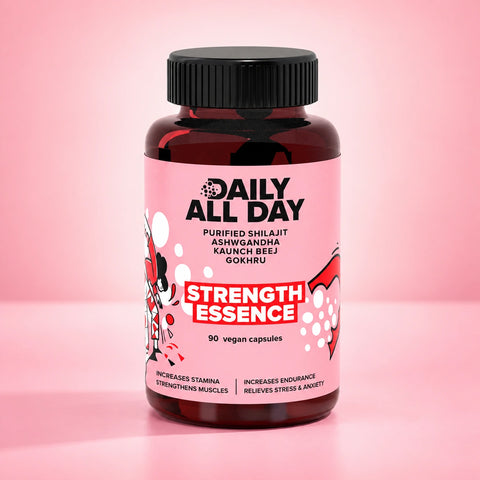
Daily All Day's Strength Essence- Energy and Stamina Booster combines Ashwagandha, Shilajit, and Kaunch Beej in a single FSSAI-compliant formulation. No AYUSH-medicine claims here, and that distinction matters for Indian buyers who are rightly confused about what they are purchasing.
Quick clarification on FSSAI vs AYUSH licensing (another gap the top-5 pages all miss): An AYUSH-licensed product is a medicine under the Drugs and Cosmetics Act, subject to pharmacopoeial standards and allowed to make therapeutic claims. An FSSAI-regulated nutraceutical or dietary supplement like Strength Essence cannot claim to treat or cure conditions, but it can legally state it "supports immunity" or "helps maintain energy." That is exactly what this product does. Knowing this helps you read labels more accurately.
Try Strength Essence- Energy and Stamina Booster →30 / 60 / 90 Day Timeline: What to Realistically Expect
Most supplement pages either promise instant results or stay vague. Here is what the research and traditional use suggest for ashwagandha for daily immunity and energy India users:
30 days: You may notice improved sleep quality and a steadier energy curve through the day. Cortisol modulation begins within 2 to 4 weeks for most adults. The BHU trial cited earlier saw measurable immune-marker changes at this stage.
60 days: Stamina during physical activity tends to improve noticeably. If you have been prone to seasonal sniffles, you may find them shorter or less frequent. This is also when many Indian users report better stress tolerance during high-pressure periods like quarterly reviews or exam seasons.
90 days: The most consistent benefits show up here: sustained energy without the 4 PM crash, better recovery after intense work weeks, and a more stable immune baseline going into seasonal transitions like the October post-monsoon shift or the dry Delhi winter.
One practical point for the Indian context: consistency across festivals matters. It is easy to drop the supplement routine during Diwali or Eid travel weeks. If you miss more than 10 days, the cortisol and immune-marker benefits can partially reverse, so plan accordingly.
Quora Q&A: Real Questions from Indian Readers
- What herbs and spices boost immunity? Ashwagandha, Tulsi, Giloy, Turmeric, and Amla are the most evidence-backed in the Indian tradition. See this Quora discussion
- What are some powerful immune-boosting herbs that can be used safely? Tulsi, Ginger, Garlic, and Ashwagandha are well-tolerated in healthy adults at standard doses. Full Quora thread here
- What are some Ayurvedic herbs for a stronger immune system? Ashwagandha is among the most cited in both Ayurvedic texts and modern research. Quora answers
- Does Ayurveda really help with long-term immunity? When used consistently, herbs like Ashwagandha, Giloy, Tulsi, and Amla show measurable immune-modulating effects in clinical studies. Read the discussion
- Which herbs are good for a healthy immune system? Ashwagandha plays a central role, particularly for adults under chronic stress. More here
How to Take Strength Essence with Indian Meals: Timing That Actually Matters
This is the section the top-ranking pages almost universally skip. Timing with Indian meal patterns matters more than most labels suggest.
Best option: After your largest meal of the day, which for most Indian families is lunch (typically dal, sabzi, roti or rice, often with a small amount of ghee or curd). The fat content in this meal significantly improves absorption of ashwagandha's fat-soluble withanolides.
Second option: After dinner, especially if you tend to eat late (post 8 PM, which is common in metro households). Taking ashwagandha at night aligns with its mild sleep-supportive properties and still benefits from the fat in your meal.
Avoid: First thing on an empty stomach, particularly with just black chai. Tannins in tea can interfere with alkaloid absorption, and the lack of dietary fat reduces bioavailability. If morning is the only practical time for you, take it with a glass of warm milk or a spoon of ghee in warm water.
Seasonal note for Indian climate: During monsoon months (June to September), humidity raises the risk of respiratory and gut-related issues. This is a good time to be consistent with ashwagandha and Tulsi. In the dry Delhi/NCR winter (November to February), Shilajit's warming properties become more relevant. Ayurveda calls this seasonal adaptation ritucharya, and the herbs in Strength Essence align naturally with this framework.
If you are also dealing with joint stiffness from long commute hours or a desk-heavy work schedule, you may find value in pairing this with additional omega support. Our post on joint care and omega 3-6-9 for Indian men worried about early mobility loss covers that angle.
Frequently Asked Questions
Should I take Strength Essence before or after my Indian meals, and does it matter with ghee or dahi?
Yes, it matters. Ashwagandha's active withanolides are fat-soluble, meaning they absorb better alongside dietary fat. Taking your capsule after a meal that includes ghee, dahi, or cooking oil (standard in most Indian lunches and dinners) meaningfully improves bioavailability compared to taking it on an empty stomach or with plain chai. After lunch or dinner is the recommended window.
I am on thyroid medication (levothyroxine). Can I take ashwagandha supplements safely?
This requires a conversation with your doctor before you start. Ashwagandha may influence thyroid hormone levels (TSH and T4), and combining it with thyroid medication without medical supervision can affect how well your existing dosage works. This interaction is well-documented enough that it is a genuine concern, not just precautionary language. Please consult your endocrinologist or a qualified Ayurvedic practitioner who knows your full medication history.
Is Strength Essence an AYUSH medicine or an FSSAI supplement? What is the difference for an Indian buyer?
Strength Essence is an FSSAI-regulated dietary supplement, not an AYUSH-licensed medicine. The practical difference: an AYUSH medicine is regulated under the Drugs and Cosmetics Act and can make therapeutic claims. An FSSAI supplement can legally state it "supports immunity" or "helps maintain energy" but cannot claim to treat, cure, or prevent any condition. This means Strength Essence is sold as a wellness product for healthy adults, not as a substitute for medical treatment. Check the label for the FSSAI licence number, which confirms it has cleared food-safety standards.
Should I use ashwagandha differently in monsoon versus summer in India?
Ayurvedic seasonal use (ritucharya) does suggest variation. During monsoon, when humidity is high and digestive fire (agni) tends to be weaker, consistent use of ashwagandha and Tulsi helps maintain immune resilience without overloading the system. In peak summer (April to June), Ashwagandha is warming in nature, so some practitioners recommend slightly lower doses or taking it with cooling anupana like room-temperature milk rather than warm water. In winter, the full dose is generally well-tolerated and aligns with the body's natural need for warming, sustaining herbs. If you have a specific health condition, check with a registered Ayurvedic practitioner for seasonal guidance.
Who should not take Strength Essence at all?
Pregnant and breastfeeding women should avoid ashwagandha-containing supplements unless a registered doctor explicitly recommends it. There is evidence from animal studies and some human case reports suggesting it may not be safe during pregnancy. People with autoimmune conditions (lupus, rheumatoid arthritis, Hashimoto's), those scheduled for surgery within two weeks, and anyone on immunosuppressant or sedative medications should consult a doctor first. Strength Essence is designed for healthy adults. It is not a substitute for prescribed medication.
How long before I notice results from taking ashwagandha daily in India?
Realistically, most people notice improved sleep and a smoother energy curve within 30 days when taken consistently after meals. Immunity-related markers (like fewer seasonal sniffles or faster recovery) become noticeable around 60 days. The most robust benefits, sustained stamina, stable mood, and a stronger seasonal immunity baseline, tend to show up after 90 days of consistent use. Missing multiple days during festivals or travel disrupts the timeline, so regularity matters more than anything else.