Low Energy Levels Despite Full Meals in East India
Share
Low Energy Levels Despite Full Meals in East India
Eat a big lunch of rice, dal, vegetables, even some fish curry—and just a couple of hours later, you feel too tired to get work done. If you live in East India, this might sound familiar. Struggling with low energy, even after eating a heavy meal, is a problem many people face in this region. The foods are tasty and the stomach is full—but something feels off. Let's find out why, and what you can do about it.
Table of Contents
- Quora QnA: Why Do We Feel Tired After Eating?
- East Indian Diet: Patterns and Problems
- Hidden Nutrient Deficiencies
- Metabolic Concerns & Insulin Resistance
- Socioeconomic & Lifestyle Factors
- How to Improve Energy Levels
- Ingredients Deep Dive: Ashwagandha, Shilajit, Gokhru & Kaunch Beej
- Frequently Asked Questions
Quora QnA: Why Do We Feel Tired After Eating?
-
Why do I have no energy after eating a large meal?
It’s common to feel tired after a heavy meal. The body needs to digest the food, so more blood flows to the stomach and less to the brain and other muscles. Heavy, carb-rich meals, like rice and roti, make this worse. (View Quora answer) -
Why would someone feel tired every time they eat Indian food?
Not just Indian food, but any meal heavy in carbs makes people sleepy. Extra rice and roti mean more carbs, which leads to insulin spikes and then tiredness. (More details here) -
After eating, why do some people suddenly feel weak?
Frequent carb intake trains the body to become insulin resistant. This means the body's cells stop accepting glucose, lowering available energy. (Read Quora explanation) -
Why do I feel too sleepy whenever I eat Indian food?
High portion sizes and carb-dominated meals (extra rice, rotis) cause spikes and dips in blood sugar, leading to sleepiness and sluggishness. (Details here)
East Indian Diet: Patterns and Problems
Traditional East Indian meals are delicious, but they frequently rely on a few major staples:
- Rice: The main source of carbohydrates—soft, white, and usually polished rice which is low in fiber.
- Wheat (rotis, parathas): Consumed with curries, also high in carbs.
- Vegetables, dals, and on special days, eggs or freshwater fish.
- Sweets (like rasgulla, mishti doi) after meals.
But research shows that 62% of Indians’ daily energy comes from low-quality carbohydrates (like white rice and processed grains). These fill you up, but don’t give lasting energy.
Read more about carbohydrates and energy here.
Hidden Nutrient Deficiencies
You might be eating enough calories. But what about vitamins and minerals? Nearly 40% of young Indian women have unrecognized nutrition problems such as:
- Anemia (iron deficiency)—feeling tired, dizzy, unable to concentrate.
- Vitamin D deficiency—weak muscles and fatigue, even with some sun exposure.
- B12, folate & other micronutrients—important for brain function and energy.
For more on iron deficiency and symptoms, visit our in-depth guide.
Studies confirm more than half of Indian rural women are anemic, with many benefiting from iron supplementation.[1][2]
Vitamin D deficiency is widely reported in India, though how much is needed and screening standards are debated.[3][4]
Metabolic Concerns & Insulin Resistance
Easily available carbohydrates from rice or sweets cause big insulin spikes. Over time, your cells stop responding properly—this is called insulin resistance. About 60% of South Asians, including many in East India, are affected without realizing it.
Symptoms include:
- Feeling tired or weak after meals
- Difficulty concentrating
- Rising waist circumference even with normal weight
Socioeconomic & Lifestyle Factors
- People in lower-income groups, or with less education, eat fewer protein-rich or vitamin-rich foods.
- Stress, sleep deprivation, and low activity levels (sitting for long hours or skipping physical exercise) worsen fatigue.
- This leads to more cases of chronic tiredness, diabetes, and other non-communicable diseases.
[6]
These factors create a cycle: poor diet → low energy → less activity → more health problems.
How to Improve Energy Levels
How to Counter Low Energy in East India?
- Eat more protein & fiber: Include pulses (dal, chana), eggs, fish, dairy, nuts, and seeds.
- Choose whole grains: Replace polished rice with red rice, brown rice, or millets. Try whole wheat over processed flour.
- Smaller portions, smart combinations: Instead of huge piles of rice, make sure each plate has veggies, dal, salad, and some protein.
- Stay hydrated: Sometimes tiredness is just mild dehydration.
- Check for hidden deficiencies: Get tested for anemia, vitamin D, or B12 if you are always tired.
- Add movement to your day: Physical activity helps with energy metabolism and mood.
-
Try herbal support: Ayurvedic blends like Ashwagandha or Shilajit may help boost stamina and fight fatigue when used consistently.
[5]
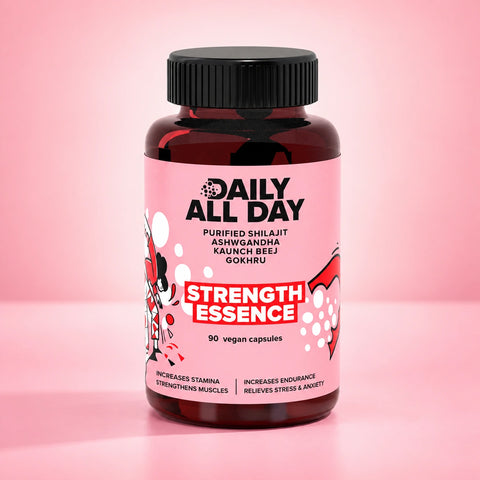
Explore the Daily All Day Strength Essence for daily stamina and better muscle strength support.
Ingredients Deep Dive: Ashwagandha, Shilajit, Gokhru & Kaunch Beej
Many supplement blends (like Strength Essence) use powerful Ayurvedic herbs designed for energy and vitality. Let's look at what each does:
- Ashwagandha: Adaptogen for stress relief, boosts stamina, and improves muscle recovery.
- Shilajit: Known to improve energy and endurance by supporting mitochondria (your body’s energy house).
- Gokhru: Traditionally used for muscle building and overall vitality; helps in natural hormone support.
- Kaunch Beej: Helps with fatigue reduction, improves strength, and supports better reproductive health.
The combination of these helps:
- Build muscle and strength
- Reduce stress and fatigue
- Boost stamina and overall wellness
- Improve men’s reproductive health and vitality
- Support back and muscle pain relief
Consumption: 1 capsule twice daily after meals, across at least 6–8 weeks, shows best results. Not for pregnant women or children.
Related Blogs to Help You Dive Deeper
- Why are so many Indians tired? - The science behind fatigue
- Carbohydrates, Energy & Balanced Diets
- Ashwagandha for Stress Relief & Energy
Frequently Asked Questions
-
What is Ashwagandha?
Ashwagandha is a root herb used for centuries in traditional Indian medicine (Ayurveda). It is called an adaptogen, meaning it helps the body cope with stress and supports natural energy and well-being. -
How does Ashwagandha help with stress?
Ashwagandha reduces high cortisol (a stress hormone) and promotes a relaxed, calm state in the body. This helps you feel less tired and more energetic over time. -
Is Ashwagandha safe for everyone?
Most people can use it safely. But it is not recommended for pregnant women or people with certain health conditions. Always consult your doctor before starting any new supplement. -
Why does rice-heavy eating make me so sleepy?
White rice is quickly turned into sugar in your blood, causing insulin spikes, short bursts of energy, and then a sudden crash. To avoid this, mix rice with high-fiber veggies and some protein. -
Can supplements like Strength Essence replace a healthy diet?
No supplement can replace a balanced diet. Use herbal capsules with a diet rich in vegetables, protein, and whole grains for best results—in combination, they can help boost energy and wellness.
Conclusion
Low energy levels after full meals are a growing concern in East India. This is due to common local diets filled with high-carbohydrate foods like rice, hidden nutrient deficiencies (such as iron and vitamin D), and metabolic problems like insulin resistance. These issues are made worse by lifestyle choices, stress, and low awareness of nutritional quality. Improving your energy doesn’t mean just eating more—it means focusing on the right balance of good carbohydrates, enough proteins and vital micronutrients in meals. Products like Daily All Day Strength Essence, with its blend of Ashwagandha, Shilajit, Gokhru and Kaunch Beej, are designed to help boost stamina, fight fatigue, and support overall wellness. However, individual results will depend on regular use and a balanced lifestyle. Awareness, smarter dietary choices, and targeted supplementation can together support better energy, mood, and daily productivity for people across East India.
References: [1], [2], [3], [4], [5]