Why Home-Cooked Food Isn’t Always Nutritionally Complete
Share
Why Home-Cooked Food Isn’t Always Nutritionally Complete
Everyone loves home-cooked meals—warm, tasty, and lovingly made. But did you know regular home-cooked food can sometimes miss key vitamins and minerals your body needs to thrive? If you’re feeling tired, getting sick often, or noticing dull skin, missing nutrients might be to blame. Let’s explore how even the best home kitchens can leave nutrition gaps, and find out what you can do to keep your body balanced, strong, and energetic every day.
Table of Contents
- Why Home Cooking Isn’t Perfect
- Cooked vs. Uncooked Nutrition—Myths & Facts
- Common Nutrition Gaps in Home Food
- How Cooking Affects Nutrients
- Ingredients Deep Dive: Daily All Day Vita Blend
- Quora Q&A: What the Community Says
- Ways to Make Home Food More Nutritious
- Frequently Asked Questions
Why Home Cooking Isn’t Perfect
Most people believe cooking at home is always healthier. It’s true that you use less oil, sugar, and don’t add extra preservatives. But still, home food isn’t always perfect. Here’s why:
- You cook the same vegetables, pulses, and grains repeatedly.
- Some essential nutrients are not present in foods commonly cooked at home, like vitamin D, vitamin B12, and zinc.
- Cooking methods (long boiling, deep frying) can destroy some vitamins and minerals.
- Buying and storing fresh produce for a balanced variety every time is not always possible.
- Busy routines mean we skip breakfast or eat incomplete meals.
This is also confirmed by many scientific studies and surveys from across the world, showing vitamin D and iron deficiencies are extremely common, even for people who cook at home[4][6].
Cooked vs. Uncooked Nutrition—Myths & Facts
There’s a lot of debate about whether raw food is healthier than cooked food. Let’s look at what experts and real people say:
- Some nutrients (like vitamin C and B vitamins) can be destroyed when you cook food, especially at high heat or for a long time.
- But cooking can also increase the bioavailability of other nutrients, making them easier to absorb, such as in cooked tomatoes (lycopene) and carrots (beta-carotene). (Quora discussion)
- Many foods are safer and easier to digest after cooking (Quora answer).
So, it’s not about choosing only raw or only cooked food. The key is understanding which nutrients are lost or gained, and where to find the missing pieces.
Common Nutrition Gaps in Home Food
Even if you eat home food regularly, research shows Indian diets and many global diets have these gaps:
- Vitamin D: Not present in most vegetarian food; main source is sunlight. Over 90% of people in some regions are deficient[4].
- Vitamin B12: Only in animal foods; vegetarians and vegans are at risk.
- Iron: Plant iron (non-heme) is poorly absorbed; common among young women and children[2].
- Zinc & Selenium: Low in wheat and rice-based diets[6].
- Vitamin C: Destroyed fast by heat and storage; linked with immune and energy issues[5].
For more on specific deficiencies, see our blog on hidden nutrient deficiencies and zinc and selenium deficiencies.
How Cooking Affects Nutrients
- Water-soluble vitamins: Vitamin C and B vitamins leach into water during boiling and are heat-sensitive.
- Fat-soluble vitamins: Vitamins A, D, E, and K mostly survive cooking but may be less in low-fat meals.
- Minerals: Can be lost if vegetables are peeled or if cooking water is thrown away.
- Some methods, like steaming, help preserve nutrients better than deep frying or boiling.
For more, check our article on balancing nutrients in daily cooking.
Ingredients Deep Dive: Daily All Day Vita Blend
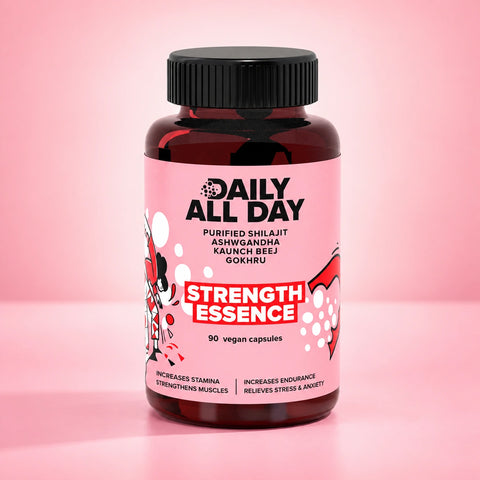
To fill in the nutritional gaps left by home-cooked food, let’s look at Daily All Day Vita Blend—a multivitamin tablet containing 23 vitamins and minerals plus 23 Ayurvedic herbs.
Key Ingredients in Every Tablet
- Vitamins: A, B1, B2, B3, B5, B6, B9 (Folic Acid), B12, C, D3, E, H (Biotin), K2-Mk7
- Minerals: Calcium, Iron, Zinc, Magnesium, Phosphorus, Iodine, Copper, Chromium, Selenium, Molybdenum
- Special Nutrients: Astaxanthin, Sunflower phospholipids, Omega 3,6,9
- Ayurvedic Herbs: Moringa, Ashwagandha, Curcumin, Panax Ginseng, Green Tea, Giloy, Spirulina, Brahmi, Arjuna, Milk Thistle, Tulsi, Licorice, Ginger, and more
How These Ingredients Help
- Immunity: Vitamin C, Zinc, Ashwagandha, Giloy
- Energy & Strength: B vitamins, Iron, Panax Ginseng, Moringa
- Overall Wellness: Multivitamins + Ayurvedic herbs for skin, digestion, and healthy metabolism
- Gut Health: Herbs and nutrients that help digestion and nutrient absorption
- 100% Vegetarian & Lab Tested: Safe for daily use with FSSAI, ISO, GMP certificates
See our in-depth multivitamin blog for more details.
Quora Q&A: What the Community Says
- Cooked food can lose some nutrition, but energy and digestibility often improve.
- Not all raw food is healthier—some values increase only after cooking.
- Home-cooked meals usually have less salt, fat, and sugar.
- Homemade food offers better hygiene and fewer preservatives, but isn’t magically more nutritious by itself.
- Homemade meals are healthy if made with the best ingredients, but need intentional variety.
Ways to Make Home Food More Nutritious
- Add more colors—different colored vegetables give different nutrients.
- Rotate grains—use millets, oats, and lentils, not just rice and wheat.
- Don’t overcook or deep fry.
- Use seeds and nuts in salads or on top of dishes.
- Try probiotic foods like curd and fermented pickles for better gut health (learn more).
- If you have picky eaters, or are vegetarian/vegan, fill gaps with a safe and certified multivitamin—especially vitamin D, B12, and minerals.
Frequently Asked Questions
1. What is Ashwagandha?
Ashwagandha is an adaptogenic herb used in traditional medicine to help manage stress and improve overall health.
2. How does Ashwagandha help with stress?
Ashwagandha helps regulate cortisol, a stress hormone, and brings a sense of calm and balance to the mind and body.
3. Is Ashwagandha safe for everyone?
While generally safe, Ashwagandha is best avoided by pregnant women or those with specific health issues.
4. What are signs of vitamin or mineral deficiency?
Common signs include tiredness, frequent illness, poor growth in kids, dull skin, stomach problems, and slow wound healing.
5. How long should I use multivitamins to see a difference?
Most people see improvements in 6–8 weeks. Consistency and pairing with a balanced diet give the best results.
Home-cooked meals are a symbol of love and care, but when we look closely, they’re not always complete in nutrition. Many vitamins and minerals—like Vitamin D, zinc, and iron—are missing or destroyed due to poor food choices, limited variety, or the way we cook. Research shows even whole populations can suffer from deficiencies (like Vitamin D and iron) despite eating at home regularly [1] [4] [6].
Adding a high-quality supplement, such as Daily All Day Vita Blend, can help fill the nutritional gaps caused by today’s food habits. Its blend of vitamins, minerals, and Ayurvedic herbs provides energy, immunity, and strength, supporting your journey to better health.
Want to learn more about overcoming nutrition gaps? Explore our articles on hidden nutrient deficiencies and women's nutrition to take your next step towards all-round wellness.
Citations: [1] [2] [3] [4] [5] [6]